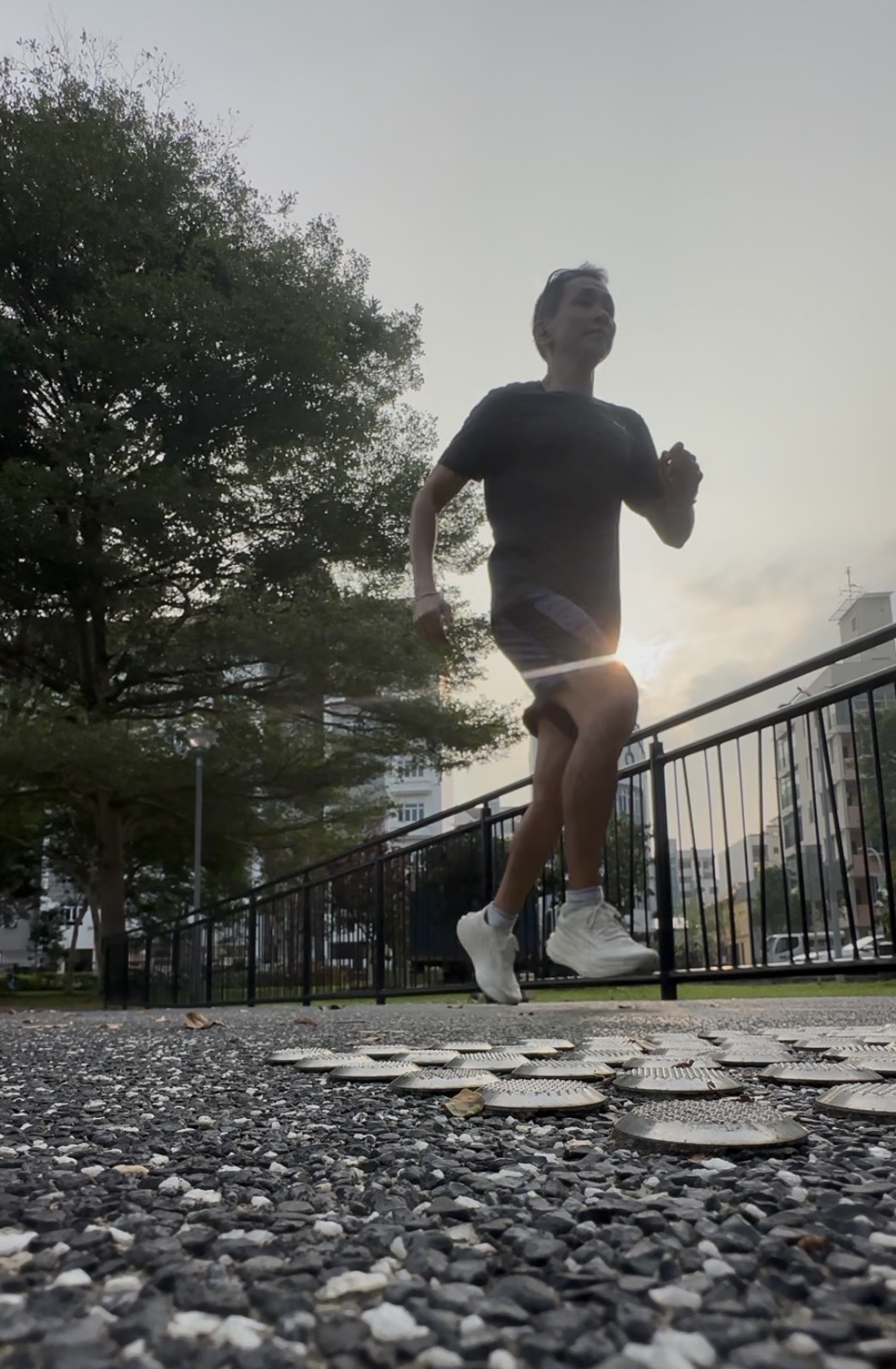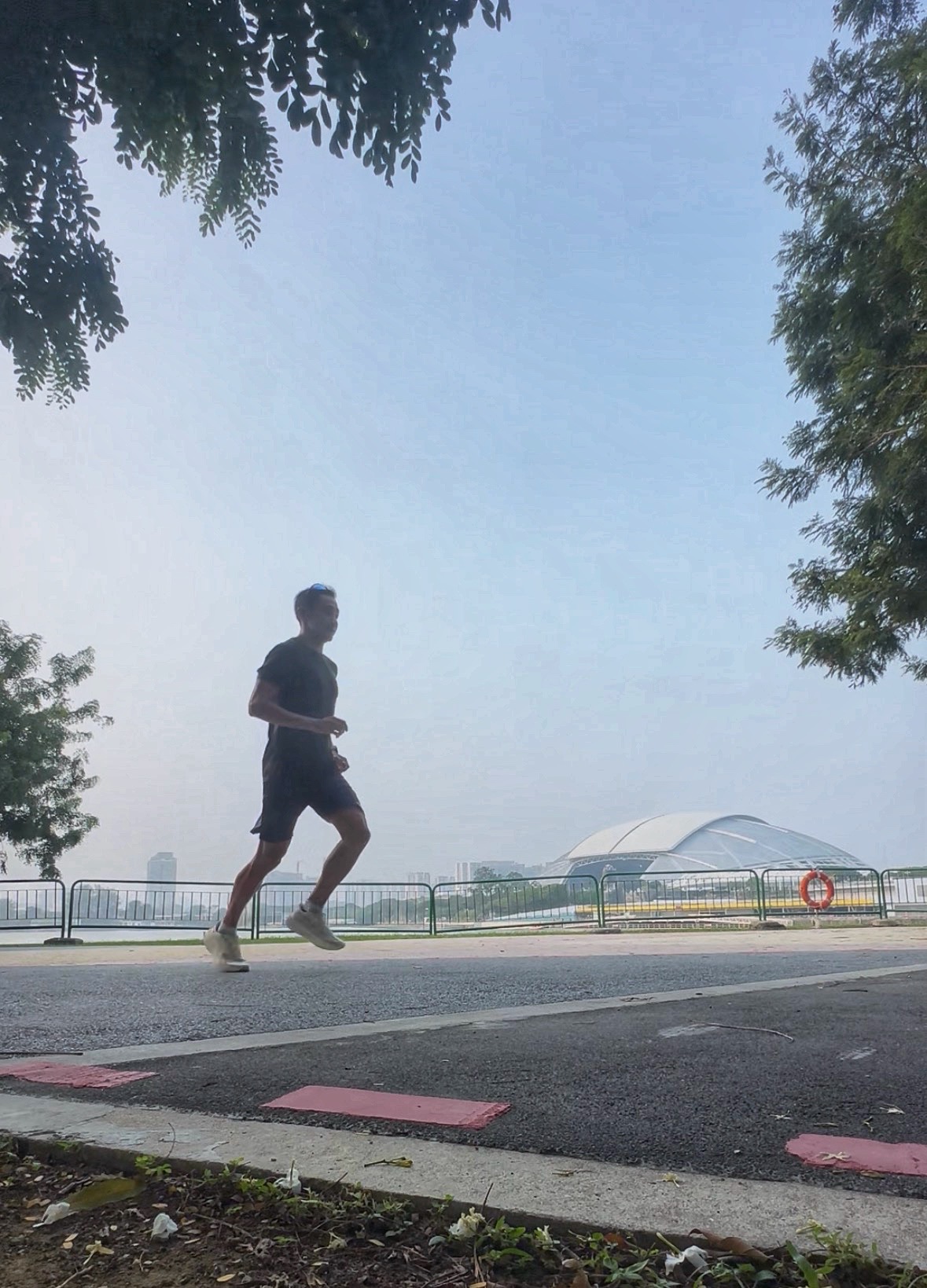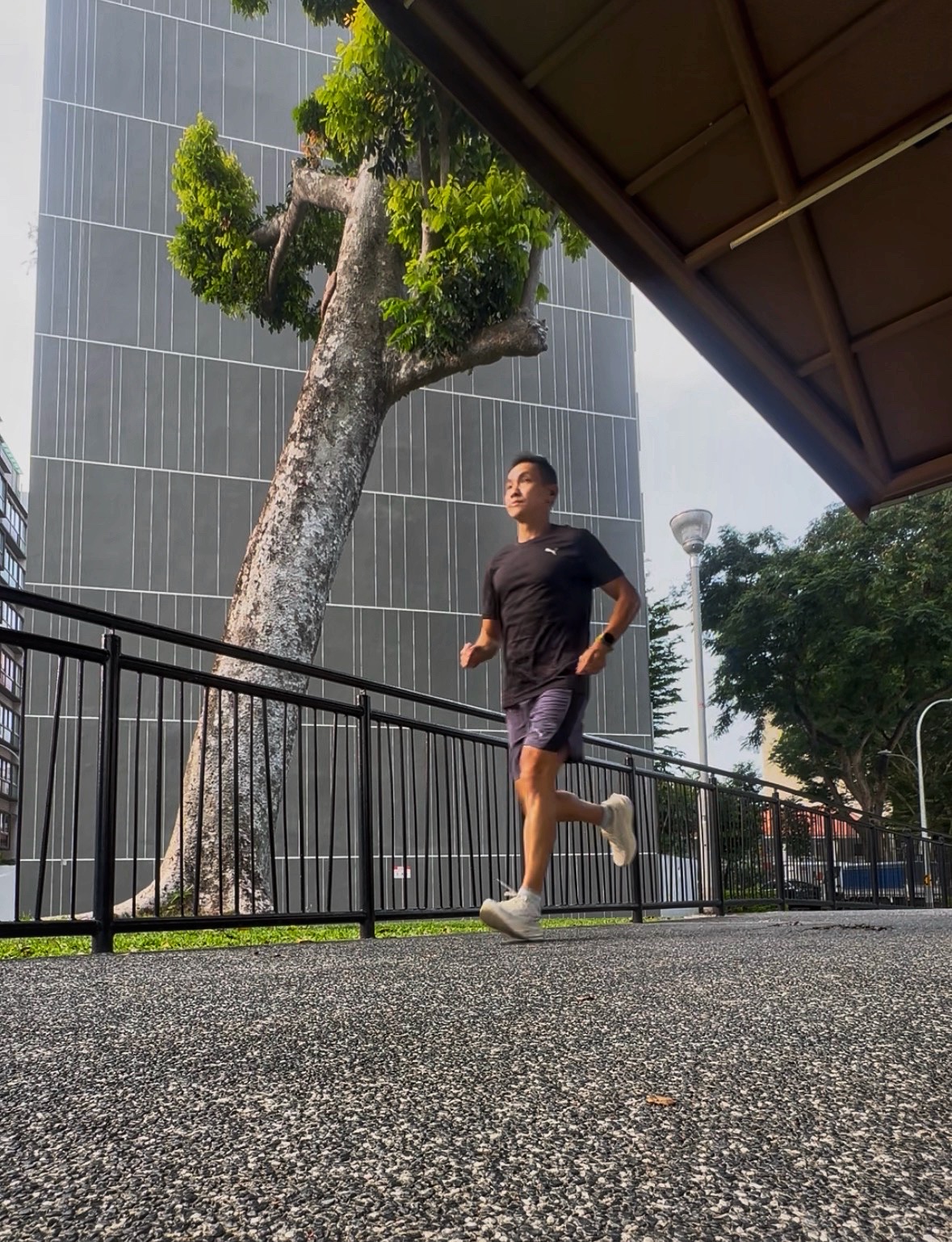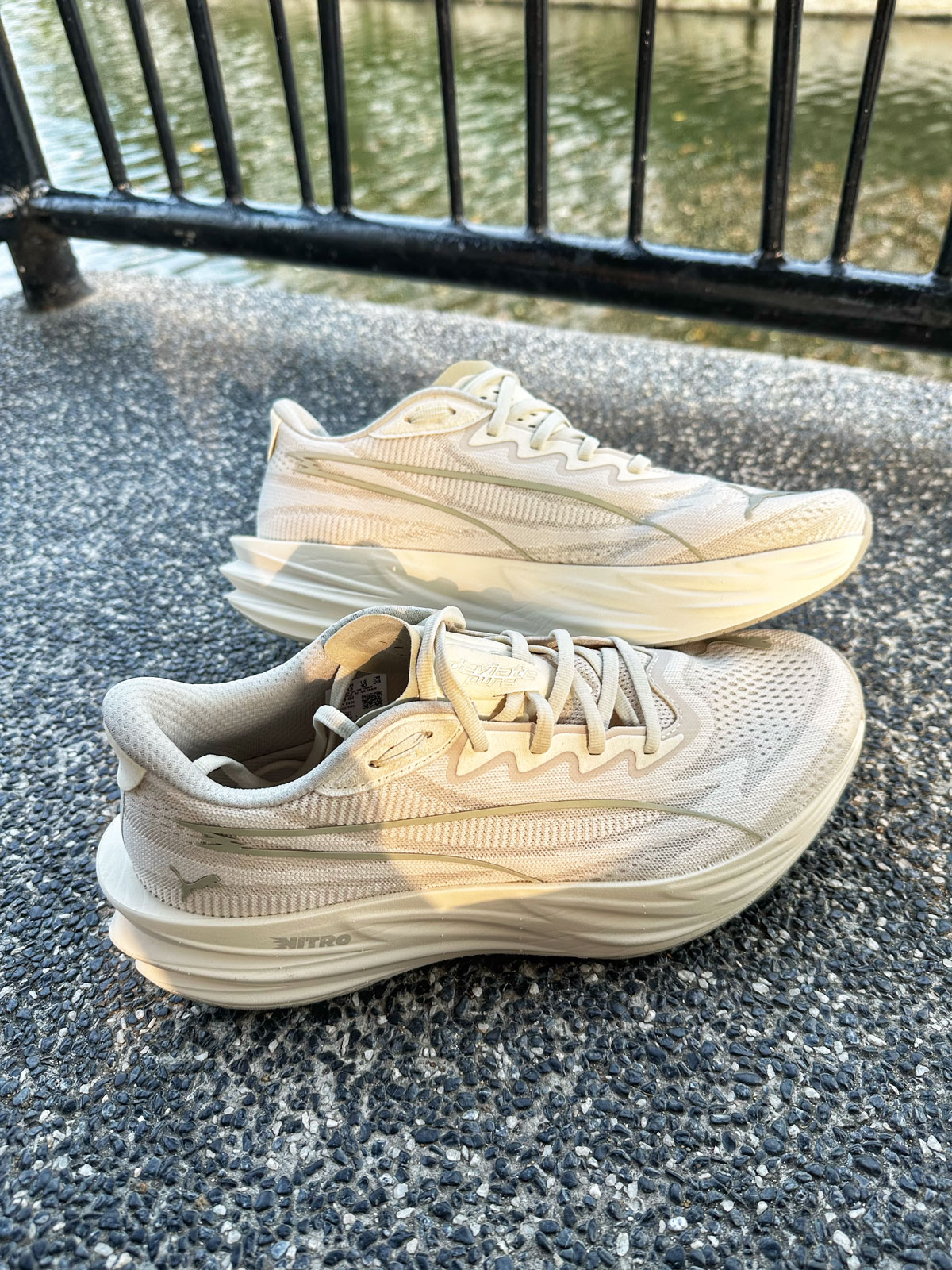

Strength Training For Runners: 5 Moves That Keep You Running For Years

Most runners here only run. More kilometres, more weekend long runs, another race on the calendar. It feels like the right way to get better. Then the knee starts to niggle, or the shin, or the Achilles, and the training that was meant to make you fitter is the thing breaking you down.

You cannot out-run a weak link. For most recreational runners in Singapore, the weak link is strength.

This is the part of training most of us skip. No time, or the worry that lifting will slow us down, or the simple belief that to run better you just run more. The research says otherwise, and so does every coach who has watched runners fall apart in the last 5km of a race.

Here is what the strength work actually is, why it matters, and how to structure 2 sessions a week around your running.

The evidence is not subtle

In 2014, a review in the British Journal of Sports Medicine looked at what actually prevents sports injuries. Stretching did almost nothing. Strength training was the clear winner: it cut overuse injuries by close to half, and the more of it runners did, the fewer injuries they got.

Staying in one piece is only half the return. A 2016 meta-analysis in the Journal of Strength and Conditioning Research found that 2 to 3 strength sessions a week improved running economy in trained runners. Better economy means you burn less energy at the same pace. That is free speed, without adding a single kilometre.

Half the injuries, and a more efficient stride, for 2 sessions a week. Nothing else in the sport pays back like that.

Why running alone breaks you down

Running is a repetitive, single-plane movement. Thousands of times per run, you load 2 to 3 times your bodyweight through one leg at a time. Do that with gaps in your strength and the gaps eventually show up as injuries.

The common weak links, and where they leave you:

– Weak glutes and poor single-leg control. The knee collapses slightly inward on each step. This is where a lot of runner’s knee and IT band pain begins.
– Under-built calves. The calf and Achilles take the highest load in running. Too little capacity, and you are looking at Achilles pain or shin splints.
– No braking strength. The ability to absorb load, not just produce it, is what holds your form together late in a race and on downhills. Without it, both punish you.

None of these get fixed by running more. They get fixed by loading them.

The 5 moves that do the work

You do not need a complicated programme. Five movements cover almost everything a runner needs. Two sessions a week, heavy enough to matter, progressing over time.

1. A squat or hinge
The foundation. A goblet squat or a Romanian deadlift builds the whole chain: quads, glutes, hamstrings, back.
– 3 to 4 sets of 5 to 8 reps.
– Heavy enough that the last 2 reps are hard.

2. Single-leg work
You run on one leg at a time, so train on one leg at a time. Split squats, step-ups and single-leg deadlifts expose the side-to-side imbalances that running hides.
– 3 sets of 6 to 8 per leg.
– Start with bodyweight, add dumbbells as you steady.

3. Loaded calf raises
The most under-trained tissue in running. Do both straight-knee and bent-knee versions to cover the whole calf and protect the Achilles.
– 3 sets of 8 to 12, slow and controlled.
– Add load. Bodyweight raises stop working quickly.

4. A braking move
The one most runners miss. Step-downs and slow lowering teach your legs to absorb force, which saves your knees on descents and holds your stride together at the end of a long run.
– 3 sets of 6 to 8, lowering slowly.

5. Anti-rotation core
Not sit-ups. Planks and Pallof presses build the trunk stability that stops energy leaking out of your stride with every step.
– 2 to 3 sets of 30 to 45 seconds, or 8 to 10 controlled reps.

Heavy means a weight you can manage for the stated reps with the last 2 feeling hard, not 20 easy ones. Add a little load or a rep each week. That progression is the whole game.

The structure is what makes it work

Here is the part a coaching studio thinks about that most runners miss. The 5 moves are only the ingredients. What turns them into results is how they are structured.

Progression. The weight that felt hard in week 1 should be your warm-up by week 6. If you do the same 3 sets of 10 with the same dumbbells all year, your body adapted months ago. Add load, reps or control every week or two. No progression, no point.
Sequencing. Strength supports your running, it does not replace it, so your key runs come first. Place the lifting around them: hard days stacked together so easy days stay easy, and never a heavy leg session the day before a long run.
Periodising to the race. The strength work should change shape across a block. Build the base in your early weeks, then shift toward maintenance and freshness as the race nears, so you arrive strong but not fatigued. Random gym sessions never do this. A plan does.
Your weak link, not the average one. The 5 moves are a starting point, not a prescription. The real gain comes from loading your specific deficit. A runner with a big left-right imbalance needs more single-leg work on the weak side; a runner whose calves give out needs more there. An honest self-check, or a proper assessment, tells you where to aim.

Most of this you can apply yourself, and that is the point. Good structure is not a secret, it is just rarely done. It is also the whole job of a coach: to load the right thing, in the right order, progressed at the right rate, for the runner in front of them.

“Won’t I get slower and heavier”

The most common worry, and the wrong one. Lifting heavy for low reps builds strength, not size. At 2 sessions a week alongside your running, you will not add the kind of size that slows you down. You get stronger, more durable and more efficient. The research is one-directional on this.

The other worry is time, and it is fair. Everyone here is busy. But 2 sessions of 30 minutes a week is nothing next to the 6 weeks you lose to one bout of runner’s knee. Strength work is not extra training. It protects the running you already do.

None of this needs a fancy setup. A pair of dumbbells, a bench and 30 minutes will do for most of it. You already do the hard part. You are up at 5am for the East Coast Park stretch before the sun turns it into a furnace, or grinding the reservoir loops at MacRitchie on a Sunday. Two proper strength sessions a week are what let you keep doing that, for years rather than months.

The runners still going strong into their 40s and 50s are rarely the ones who ran the most. They are the ones who stayed healthy long enough to keep getting better. Strength is how you get there.

Written by the co-founders of Catalyst Performance, a studio in Singapore’s CBD that coaches runners across every distance (catalystperformance.sg/personal-training-for-runners-singapore): Bervin Manoharan, Dr Luqman Haris (a medical doctor) and Jeremy Soh (more than 25 marathons and three HYROX podium finishes).

References:
– Lauersen JB, Bertelsen DM, Andersen LB (2014). The effectiveness of exercise interventions to prevent sports injuries: a systematic review and meta-analysis. British Journal of Sports Medicine.
– Balsalobre-Fernandez C, Santos-Concejero J, Grivas GV (2016). Effects of strength training on running economy in highly trained runners: a systematic review with meta-analysis. Journal of Strength and Conditioning Research.

What Really Happens to Your Body When You Exercise Regularly?

Starting an exercise routine is one of the best investments you can make in your health. Yet many people quit after just a few weeks because they don’t see dramatic physical changes immediately. The truth is that your body is transforming from the very first workoutโ€”you just can’t always see it.

Regular exercise doesn’t simply change your appearance. It strengthens your heart, boosts your energy, improves your mood, enhances endurance, and lowers your risk of chronic disease. These changes happen gradually, with different milestones appearing over weeks and months of consistent training.

Here’s what you can realistically expect when exercise becomes part of your lifestyle.

Week 1: Your Body Starts Adapting

The first few workouts are often the hardest.

You may feel excited after exercising, only to wake up the next day with sore muscles. This is known as Delayed Onset Muscle Soreness (DOMS), and it’s a normal response as your muscles adapt to unfamiliar movements.

The encouraging part? Your body is already beginning to improve.

During this first week, exercise increases blood flow, releases endorphins (your natural feel-good hormones), and helps improve mental alertness. Even if you’re tired during the workout, many people notice they feel more energetic and positive afterwards.

What to focus on:

  • Prioritise consistency over intensity
  • Walk, jog, cycle, or do light strength training
  • Stay hydrated and get enough sleep for recovery

Weeks 2โ€“4: More Energy, Better Stamina

By the end of the first month, the improvements become much more noticeable.

Your cardiovascular system becomes more efficient at delivering oxygen to working muscles. Everyday activitiesโ€”climbing stairs, carrying groceries, or walking longer distancesโ€”begin to feel easier because your heart and lungs are adapting.

You may also notice:

  • Increased energy throughout the day
  • Improved concentration
  • Better sleep quality
  • Reduced feelings of stress

This is also an excellent time to introduce resistance training. Bodyweight exercises, resistance bands, or light weights help activate muscles and lay the foundation for long-term strength.

Month 2: Your Endurance Levels Rise

Around the second month, important changes begin happening at the cellular level.

Your body starts producing more mitochondriaโ€”often called the “powerhouses” of your cells. These tiny structures generate the energy your muscles use during exercise, meaning more mitochondria translate into greater endurance and less fatigue.

This explains why workouts that once felt exhausting gradually become manageable.

Runners may notice they can maintain pace more comfortably, while gym-goers often find they recover faster between sets.

Signs you’re progressing:

  • Longer workouts feel easier
  • Recovery improves
  • Resting heart rate may gradually decrease
  • Daily fatigue becomes less noticeable

Months 3โ€“6: Visible Changes Begin

This is the stage many people have been waiting for.

After roughly three months of consistent exercise, physical changes often become visible. Muscle definition improves, posture becomes stronger, and daily movement feels noticeably easier. More importantly, research suggests that people who maintain an exercise habit for the first three months are much more likely to continue exercising long term.

Rather than chasing perfection, this is where consistency starts paying off.

Combine regular cardio with strength training to maximise results. A stronger core, improved balance, and increased muscle mass all contribute to better athletic performance and injury prevention.

Months 6โ€“9: Your Heart Becomes Stronger

If you’ve continued exercising consistently, your cardiovascular fitness reaches another level.

One of the biggest improvements during this period is an increase in VOโ‚‚ maxโ€”your body’s ability to use oxygen efficiently during exercise. A higher VOโ‚‚ max allows you to run, cycle, swim, or play sports with less fatigue while improving overall endurance.

For runners, this often translates into:

  • Faster recovery between intervals
  • More comfortable long runs
  • Improved race performance
  • Greater aerobic capacity

Introducing occasional interval or high-intensity workouts can further enhance these benefits, provided they’re balanced with adequate recovery.

One Year: A Healthier, Stronger You

After a year of regular exercise, the benefits extend far beyond fitness.

Weight-bearing and resistance exercises help improve bone density, reducing the risk of osteoporosis as you age. Regular physical activity is also associated with lower risks of heart disease, Type 2 diabetes, certain cancers, and other chronic illnesses.

Perhaps the greatest achievement isn’t your physiqueโ€”it’s your lifestyle.

Exercise becomes less of a task and more of a habit. The people who experience the biggest long-term health gains aren’t necessarily the ones training the hardest; they’re the ones who keep showing up.

The Mental Benefits Are Just as Powerful

Physical transformation is only half the story.

Exercise is one of the most effective natural ways to support mental wellbeing. Regular movement helps reduce anxiety and stress while promoting the release of endorphins and other mood-enhancing chemicals that improve emotional resilience.

Many people report improvements in:

  • Mood and happiness
  • Confidence
  • Productivity
  • Sleep quality
  • Stress management

Even a 20 to 30-minute workout can positively influence how you feel for the rest of the day.

Why Most People Quit Too Early

The biggest mistake beginners make is expecting visible results within two weeks.

In reality, the earliest improvements happen inside your bodyโ€”better circulation, stronger muscles, healthier cells, and improved cardiovascular function. Visible changes simply take longer to catch up.

Think of exercise as planting a tree. You won’t see much growth immediately, but with regular care, the transformation becomes remarkable over time.

Consistency Beats Perfection

You don’t need to exercise every day or complete intense workouts to experience meaningful benefits.

A sustainable routine might include:

  • 3โ€“4 strength sessions each week
  • 2โ€“3 cardio workouts such as running, cycling, or brisk walking
  • Regular mobility and stretching for recovery
  • Adequate sleep and nutrition to support adaptation

The best workout is ultimately the one you’ll continue doing.

Your Future Self Starts Today

Exercise is one of the few habits that rewards you almost immediately while continuing to pay dividends for years to come.

Within days, you’ll feel more energised. Within weeks, your stamina improves. Within months, you’ll grow stronger and fitter. And over the years, you’ll dramatically improve your long-term health and quality of life.

The hardest part is rarely the workoutโ€”it’s taking the first step.

Your body is ready to change. All it needs is consistency.

How to navigate Malaysia’s terrains:ย Tips for beginners from Garmin’s trail runners

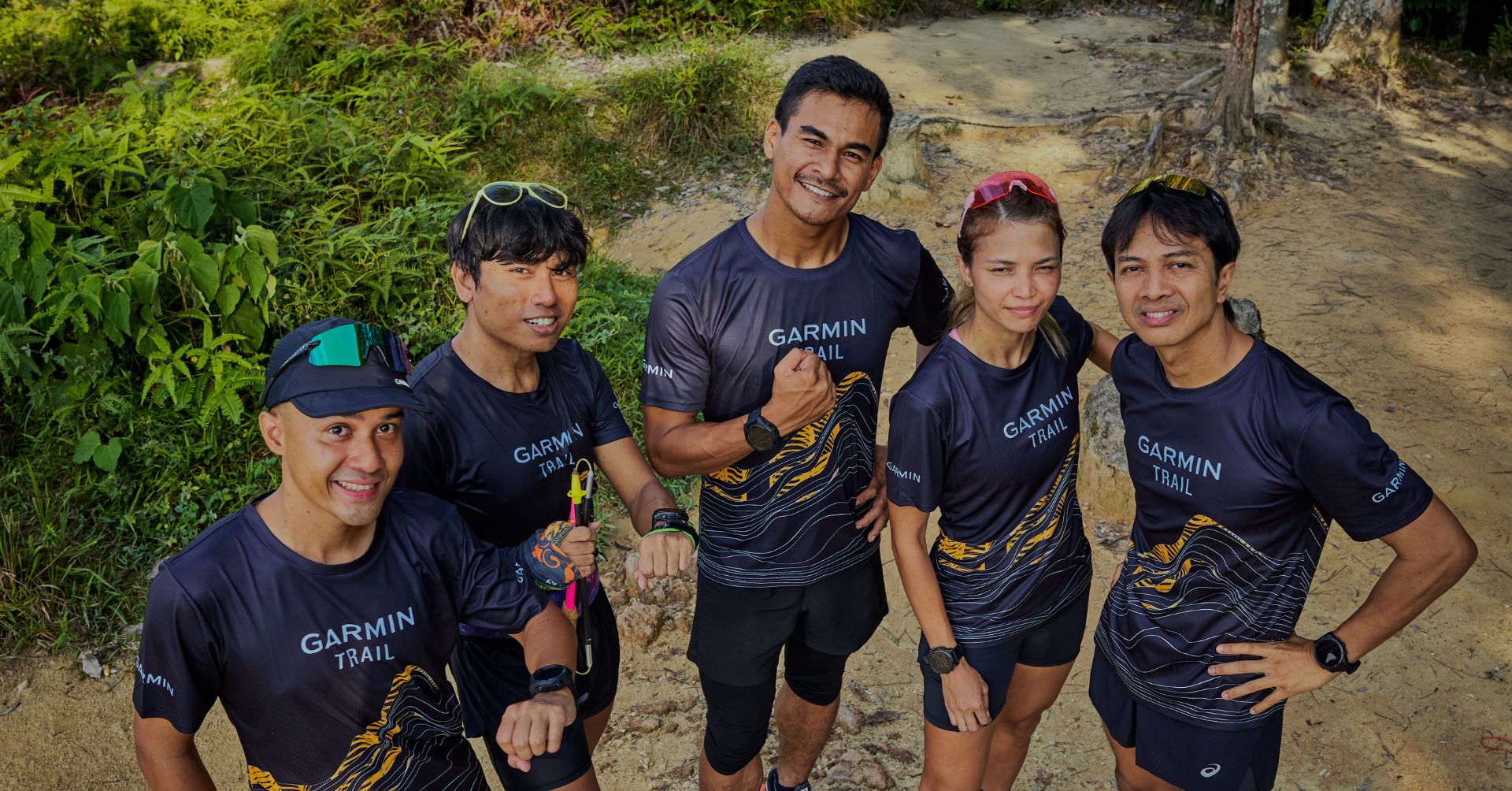
Across Malaysia, the interest in endurance sports has taken a shift as runners trade predictable, concrete city loops for natural terrains. Moving off-road is no longer just a trend; it is a pursuit that requires strategy, technique, and safety measures that is different from the traditional road running. To provide a guide to navigating this transition, Garmin Malaysia trail athletes and coaches; Maihazan Nurafendy, Jalil Nasir, Kristjan Chapman, Syarifah Balqis, Zukhairi Ahmad, and Asyraf Ghazali share a blueprint on the art of wilderness running, balancing physical strategy with the support of data precision.

The Reality of Trail Mindset and Training Balance

For those accustomed to the structured, pace-driven metrics of road running, the first step toward the trail requires letting go of the need for speed. On natural terrain, effort management takes priority over flat-ground speed.

Coach Zukhairi Ahmad notes that true performance is dependent on how well one adapts to shifting elevations. “Trail running is less about pace and way more about effort management,” Zukhairi notes. “Every trail hits differently, requiring strength, balance, focus, and quick decision-making. Walking during steep climbs is completely normal, and honestly, itโ€™s often the smartest strategy to conserve your legs.”

Malaysiaโ€™s fastest ranked trail runner, Asyraf Ghazali, views the sport as requiring more mental strategy rather than a pure sprint or body endurance. On natural terrain, moving efficiently is all about staying adaptable and tuning into your body rather than chasing a fixed number on a stopwatch.

Elite runner Jalil Nasir highlights that transitioning off-road is a rewarding process that relies on listening to your body’s natural signals. “Trail running is more technical and requires greater endurance than road running,” Jalil shares. “You need to pay attention to the terrain while managing your energy throughout the run. Listen to your body, monitor your heart rate, donโ€™t push too hard, and most importantly, enjoy the experience.

Unlike road running where pace is the ultimate goal, trail running is all about effort management. To navigate the nature of the sport successfully, endurance athlete Kristjan emphasizes the value of proactive preparation. “Trail running can be more physically and mentally demanding, there will be times where you will have to run in the dark, deal with constant changes in elevation and possibly the weather. I would say always be prepared. If you know that you are going to be out for a long period of time, make sure you have enough with you that will support your effort,” Kristjan shared. โ€œHiking steep climbs is standard practice, even for elite runners,” Asyraf added. He advises newcomers to immerse themselves in studying the terrain and managing their internal energy reserves rather than fixing their eyes on a continuous speed target.

This patient, calculated approach is what allows long-distance athletes like Maihazan Nurafendy to sustain momentum. He cautions that forcing a conventional road pace onto highly technical alpine paths is a fast track to exhaustion. Building that initial confidence off-road comes down to personal growth rather than keeping pace with anyone else. As Asyraf Ghazali notes, “Don’t compare yourself to others because everyone starts somewhere. Set small, achievable goals and focus on enjoying the process instead of only chasing race results. Consistency matters more than motivation, so show up regularly if you want to see progress.”

Maihazan echoes the same sentiment that the key to progression relies on steady, long-term dedication rather than forcing rapid results. “The biggest lesson is consistency. Success comes from showing up every week, building gradually, respecting recovery, and trusting the training process. Whether you’re preparing for a 10K or a 450 km ultra, the fundamentals remain the same: stay consistent, be patient, and enjoy the journey,” he shared.

The Starter Pack: Gear Up and Go

With all the noise surrounding the must have tools needed for trail running, the Garmin athletes, break down the non-negotiable checklist for anyone thinking of taking up trail running:

  • Suitable Gears built for the Outdoors:ย Leaving the tarmac requires specialized footwear. Zukhairi Ahmad emphasizes selecting shoes with aggressive traction and comfortable weather-appropriate running apparel that are designed for the outdoors specifically to maintain stability on mud, wet roots, and loose gravel.
  • Smart Fuel and Hydration:ย Managing your energy and hydration in tropical humidity is an important aspect in performance and endurance. Kristjan recommends a sleek, high-capacity hydration vestย  for fueling or multiple soft flasks where one can store enough water and nutrition such as gels, bars or electrolytes as he recommends at least 60 grams of carbohydrates every single hour, supported by ample hydration.ย 
  • Standalone Navigation Devices:ย Cellular signal is often not available when you are deep in the wilderness. Syarifah Balqis and Jalil Nasir both emphasize the importance of a dedicated GPS watch pre-loaded with the route’s GPX map alongside a fully charged phone, allowing you to backtrack seamlessly if you lose the path.

Safety First: The Rules of Solo Runs vs. Squad Support

Safety in trail running has been a hot topic of discussion, given that trail run requires navigating sudden weather shifts, environmental terrain and physical fatigue that might take a turn for the worse at any time. The Garmin athletes share strict safety protocols, whether you choose to run alone or with your local community.

For runners with independent training blocks, Kristjan treats real-time location data as an essential baseline. “I highly recommend letting someone know where you are running and turning on your live location,” he shared. “If something goes wrong, you have someone who can pinpoint the exact place you were last seen.”

Syarifah Balqis relies on her watch navigation as a safety precaution especially as a woman on her solo training routines. While highly populated urban trails like Bukit Kiara and Sri Bintang offer a safer framework for solo sessions, she encourages more precaution in secluded zones and unfamiliar areas. “Learn to use the GPX map so you can find your way out or backtrack if necessary,” Balqis advises. Jalil Nasir supports this, warning runners to never explore unfamiliar paths solo without deeply studying the route and downloading the map file first.

For those who are unfamiliar with the sport or wish to explore more routes safely, the athletes suggested joining communities that organise public runs. The Garmin Trail Community acts as the perfect space to explore the sport and learn from experienced runners. “The Garmin Trail Community is perfect for beginners, the community leaders bring you to new places, guide you, and run at a super comfortable pace,” Balqis shared. Kristjan added that the community brings beginners and elite runners together to share trail etiquette and skills naturally, removing the pressure of solo exploration.

Using Data to Train Smarter

Data plays an important role in helping trail runners to monitor and optimise their performance after every trail. It is especially useful in breaking down how the body is reacting to certain circumstances, especially with elevation and difficult terrain in the picture.  

For Zukhairi, he relies on data to ensure that performance is prioritised without compromising the body. By monitoring specific metrics such as Training Readiness and Recovery Time, it allows him to create a more efficient training plan for the week while avoiding the risk of overtraining. He also utilizes the ClimbPro feature on the trail to track upcoming ascents, helping him gauge real-time elevation changes and distribute his energy evenly. 

Asyraf Ghazali shared that he relied on data as well while heading back to training after recovering from an illness in the earlier year, noting that ClimbPro was instrumental in helping him monitor his immediate effort against the terrain so he wouldn’t accidentally overexert himself. Rather than training strictly through discomfort, he monitors his heart rate variability and recovery scores as a signal of when to push harder and when to rest. “I pay attention to both data and how my lung and brain feel due to my current sickness,” Asyraf shared. “If my resting heart rate is unusually high, my legs feel heavy, or I have difficulty breathing, it’s a sign that recovery is the better choice. Missing one hard session wonโ€™t ruin your fitness, but ignoring fatigue leads to injury.”

Balancing Training while working a 9-to-5

Sustaining this performance standard around a corporate routine requires strict time efficiency. Jalil Nasir suggests moving primary training blocks to early morning windows when you are mentally and physically fresh, saving heavy weekend blocks for the mountains.

To build a well-rounded foundation around full-time careers, the athletes share similar routines of balancing intentional conditioning with structured recovery and rest. Athletes like Kristjan and Syarifah Balqis place a heavy emphasis on mid-week base building and low-impact cross-training, highlighting that structured recovery is an important element of endurance training rather than just passive time off. When managing a demanding day at work alongside natural terrain training, prevent chronic fatigue by allowing the body adequate windows to adapt and repair itself to ensure sustainable growth in trail running. 

To help working professionals build a sustainable foundation, Maihazan shared a balanced, repeatable training blueprint:

  • Monday: Recovery or rest
  • Tuesday: Speed or interval session
  • Wednesday: Easy run
  • Thursday: Hill training or tempo
  • Friday: Rest
  • Saturday: Long trail run
  • Sunday: Recovery run or strength training

Finding success on natural terrain relies on consistent training, calculated recovery, and understanding the body through data. For those looking to kickstart their journey in trail running, stay tuned for the upcoming Garmin Trail Community gathering onย Garmin Run Club Malaysiaโ€™s Instagram page. Selected Garmin outdoor smartwatches are available at up to 40% savings during Garminโ€™s Happy Merdeka promotion until 31 August 2026. To find out more, visitย https://www.garmin.com.my/event/2026/merdeka-day/.ย 

The 2026 BYD Singapore International Marathon presented by adidas: Look Good, Feel Good, Finish Proud With Everything Runners Get to Experienceย and Take Home This Year

Singapore, 1 July 2026 โ€” Few feelings rival the moment a runner crosses the finish line. Arms raised, heart pounding, months of training paying off in that final stride. And the pride doesnโ€™t end there. It lives on in every glance at the medal on the wall and every time the finisher tee is pulled on and worn with pride. 

Hereโ€™s the best part: that pride is within reach the moment you sign up. Register for the 2026 BYD Singapore International Marathon presented by adidas, taking place from 4 to 6 December 2026 and you will take home a race pack worth up to S$175, home-grown artist-designed adidas BYD Marathon finisher and Kids Dash participant tees that double as wearable art, and a premium, engravable finisher medal, all yours to keep. With more sponsors still to come, that value only grows. Donโ€™t wait: register now at singaporeinternationalmarathon.com before registration closes on 30 September 2026. Hereโ€™s a first look at what awaits on race weekend.

The Race Pack: Performance Meets Style (Worth Up to S$175)

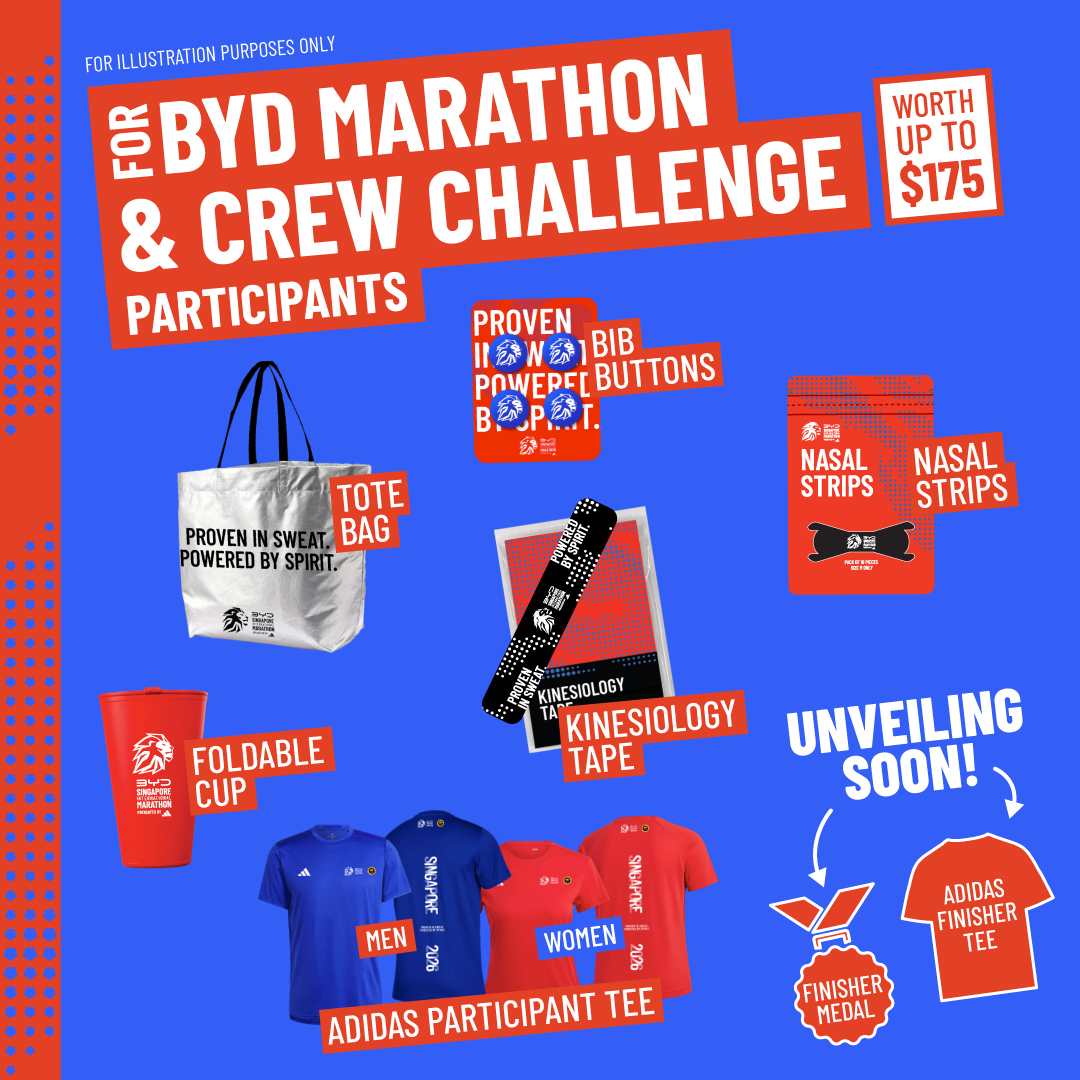
This yearโ€™s entitlements are where functionality is elevated by design. Think nasal strips to help you breathe easier, kinesiology tape to keep you moving, a reusable foldable cup and a tote to carry it all, so runners can look fresher, breathe better and feel cooler from start to finish.

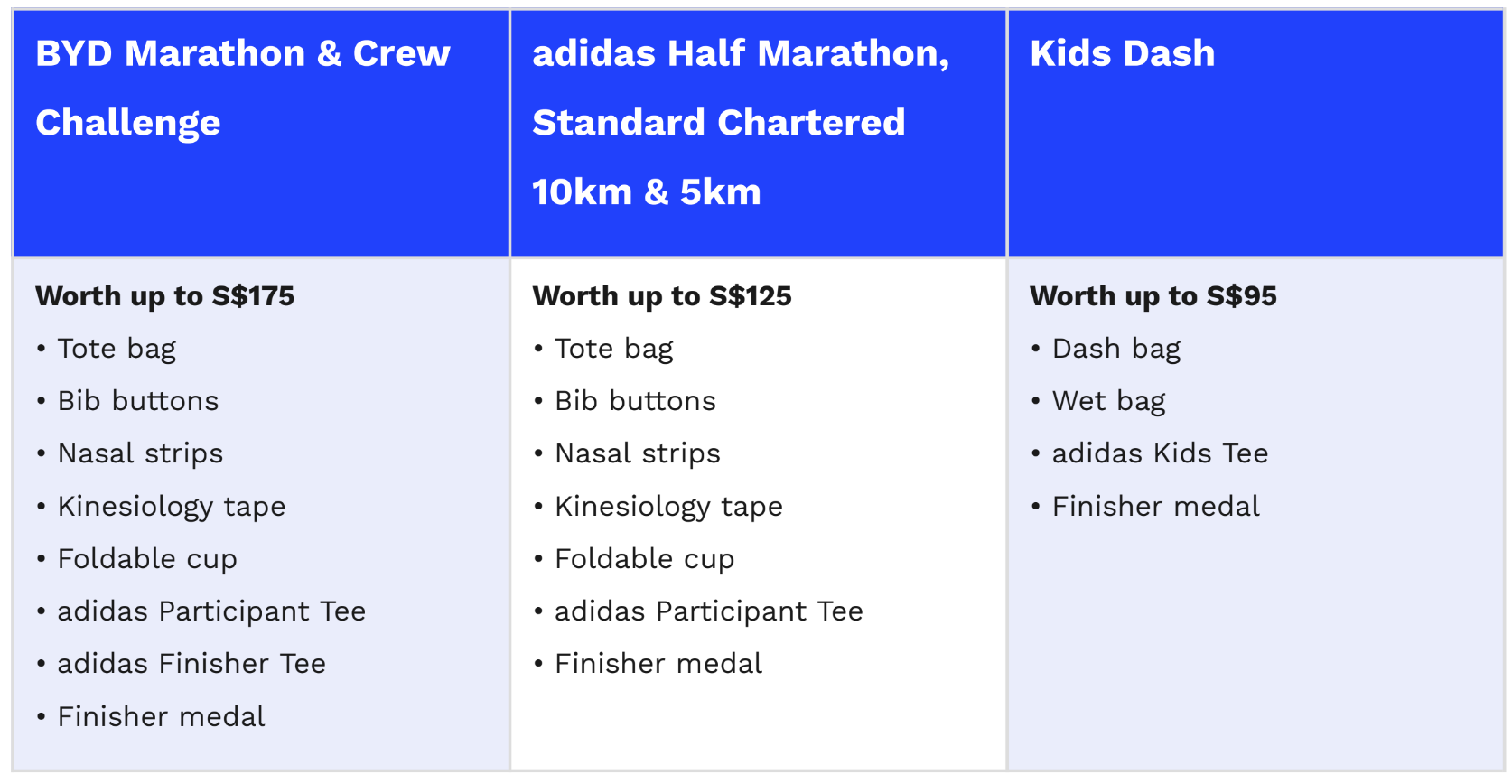
Every race pack is thoughtfully curated for the runnerโ€™s journey, with the value of goodies scaling by category:

The Finisher Medals: Badges of Honour

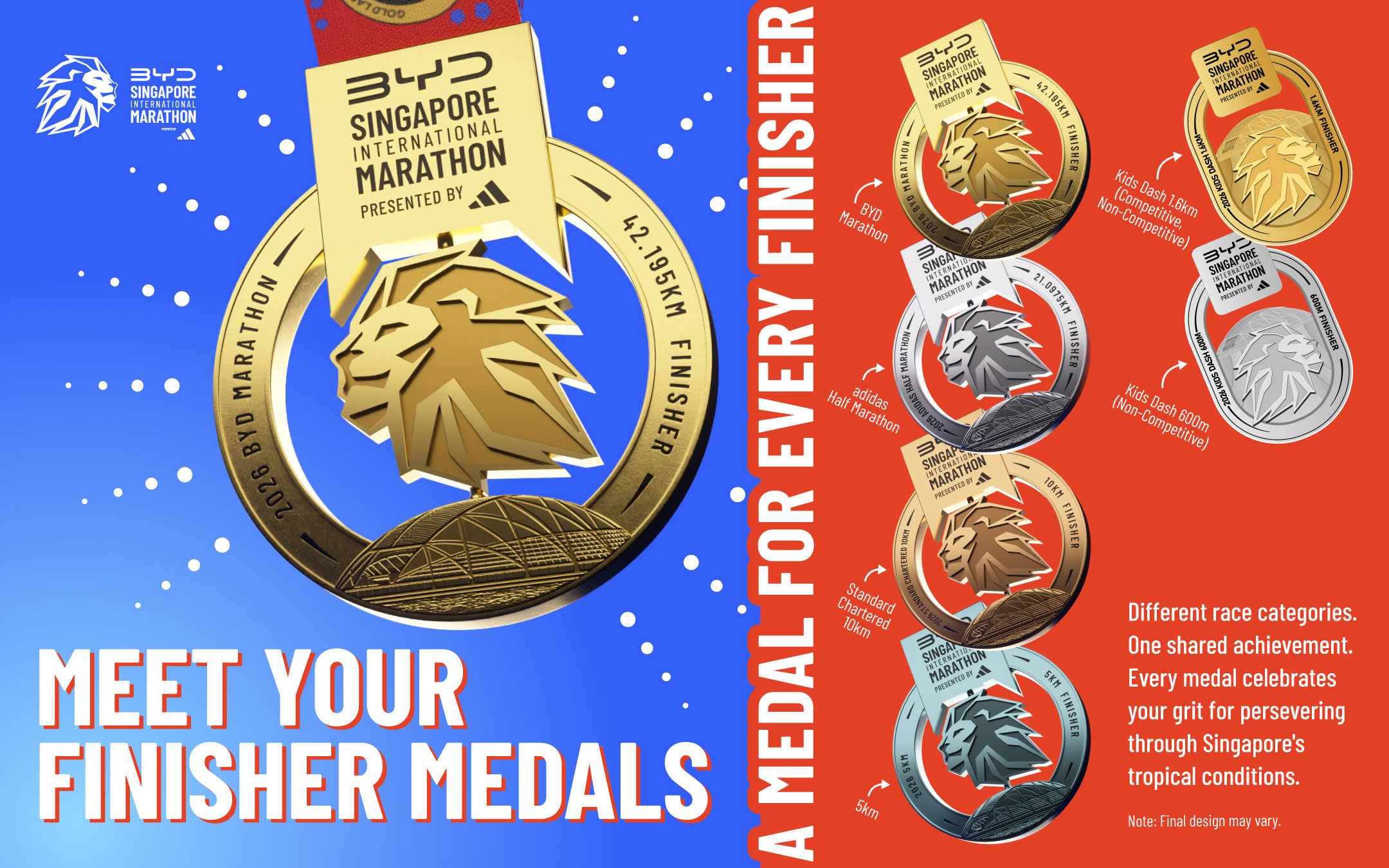
More than just medals, this yearโ€™s finisher medals are badges of honour for conquering Singaporeโ€™s heat and humidity. The finisher medals are designed to move with you, featuring a rotating centrepiece that captures the momentum and drive behind every finish, along with a tribute to the National Stadium where the race comes to its unforgettable end. Each one carries the race mantra “Proven in Sweat. Powered by Spirit.” and a dedicated space to engrave your name and finish time, turning every medal into a personal keepsake.

The Finisher Tees: Designed by a Runner, for Runners

As Singaporeโ€™s only national marathon, the BYD Singapore International Marathon presented by adidas is proudly Singaporean. This year, both the 2026 BYD Marathon Finisher Tee and the 2026 Kids Dash Participant Tee are designed by a local artist, Jonny, from our own running community.

Friends of SGIM: A Network of SME Partners to Reward Participating Runners Across Singapore

New for 2026, Friends of SGIM carries the marathon beyond the start line and into Singapore’s neighbourhoods. To be launched this month, it is a growing network of homegrown F&B and wellness businesses celebrating the running community in the lead-up to race weekend.

For runners, that means perks and rewards for them across the island. Participating cafes, restaurants, wellness studios and local brands carry marathon branding and welcome runners with exclusive perks, from discounts to marathon-themed treats, turning a single race entry into a season of rewards around the city.

It is the same proudly Singaporean spirit behind this year’s finisher tee: a national marathon championing the local talent and homegrown businesses that support our communities. And the more the network grows, the more runners get to enjoy, one more reason to sign up early.

Think Protein Is Just for Building Muscle? Think Again

Protein is often associated with athletes, bodybuilders, and people trying to build muscle. While it certainly plays a crucial role in muscle growth and recovery, its importance extends far beyond the gym.

Every cell in your body contains protein. It is essential for building and repairing tissues, producing enzymes and hormones, supporting the immune system, and maintaining healthy skin, hair, and bones. Getting enough protein can also help with weight management, healthy ageing, and overall well-being.

Whether you’re an active runner, strength trainer, or simply looking to improve your health, here’s why increasing your protein intake could be one of the smartest dietary changes you make.

1. Protein Helps You Feel Fuller for Longer

If you often find yourself reaching for snacks shortly after a meal, protein could be the missing ingredient.

Among the three main macronutrientsโ€”protein, carbohydrates, and fatโ€”protein has the greatest effect on satiety, helping you feel full for longer. It also influences hormones that regulate hunger and appetite, making it easier to control calorie intake naturally.

Including protein at every meal may help reduce cravings and unnecessary snacking throughout the day.

2. Supports Muscle Growth and Recovery

Muscles are constantly being broken down and rebuilt, especially after exercise.

Protein provides the amino acids needed to repair muscle fibres and stimulate muscle protein synthesis. This is why athletes, runners, and gym-goers are encouraged to consume adequate protein throughout the day, particularly after training.

Combined with resistance training, sufficient protein intake helps build lean muscle, improve strength, and speed up recovery after workouts.

3. Helps Maintain Muscle as You Age

Ageing naturally leads to a gradual decline in muscle mass and strength, a condition known as sarcopenia.

Regular strength training and adequate protein intake are two of the most effective ways to slow this process. Preserving muscle helps older adults remain independent, maintain mobility, and reduce the risk of falls and fractures.

Eating enough protein becomes even more important as we get older.

4. Supports Strong Bones

For years, there was concern that high-protein diets might weaken bones by increasing calcium loss.

However, more recent research suggests the opposite. Protein supports bone health by improving calcium absorption and helping maintain bone density, particularly when combined with adequate calcium intake and regular weight-bearing exercise.

Healthy bones rely on more than just calciumโ€”they also need enough protein.

5. May Boost Your Metabolism

Digesting food requires energy, a process known as the thermic effect of food (TEF).

Protein has the highest thermic effect of all the macronutrients, meaning your body burns more calories digesting protein than it does digesting carbohydrates or fats.

Although this won’t replace regular exercise, it can slightly increase daily energy expenditure and support weight management over time.

6. Can Help Lower Blood Pressure

High blood pressure is one of the leading risk factors for heart disease and stroke.

Some studies suggest that higher protein intake, particularly from plant-based sources, may contribute to modest reductions in blood pressure. While protein is not a replacement for medication when prescribed, it can form part of an overall heart-healthy lifestyle that includes exercise, maintaining a healthy weight, and limiting sodium intake.

7. Supports Weight Loss

Losing weight isn’t just about eating lessโ€”it’s also about eating smarter.

Because protein helps increase fullness, preserve muscle mass, and slightly boost metabolism, high-protein diets are often associated with improved weight-loss outcomes.

Maintaining muscle during weight loss is particularly important because muscle helps keep your metabolism higher than fat tissue does.

The goal isn’t to eliminate carbohydrates or fats but to create a balanced diet with adequate protein.

8. Helps Your Body Recover After Injury

Protein plays a vital role in repairing damaged tissues.

Following surgery, illness, or injury, your body’s demand for protein often increases as it works to rebuild muscles, skin, connective tissue, and other structures.

Adequate protein intake supports healing and may shorten recovery time when combined with appropriate medical care and rehabilitation.

9. Strengthens the Immune System

Proteins form antibodies, enzymes, and many of the cells involved in immune defence.

Without enough dietary protein, the body may struggle to produce these essential components, potentially reducing its ability to fight infections effectively.

A balanced diet rich in protein supports overall immune health alongside vitamins, minerals, regular sleep, and physical activity.

10. Easy Ways to Eat More Protein

Meeting your protein needs doesn’t require complicated meal plans.

Some simple strategies include:

  • Include a source of protein at every meal.
  • Start your day with eggs or Greek yoghurt.
  • Snack on cottage cheese, edamame, or nuts.
  • Choose lean meats, fish, tofu, beans, or legumes.
  • Add protein-rich foods after workouts.
  • Consider a protein shake if you struggle to meet your daily requirements through food alone.

Aim for a variety of protein sources, including both animal and plant-based options, to obtain a wide range of nutrients.

How Much Protein Do You Need?

General recommendations suggest that most healthy adults consume at least 0.8 grams of protein per kilogram of body weight daily.

However, protein needs increase for people who are physically active, older adults, pregnant women, or those recovering from illness or injury. Many athletes and individuals engaged in regular strength training may benefit from consuming approximately 1.2 to 2.0 grams per kilogram of body weight, depending on their goals and training intensity.

If you’re unsure about your protein needs, consulting a registered dietitian or healthcare professional can help you determine an intake that’s appropriate for your age, activity level, and health status.

Quality Matters Too

Not all protein sources are created equal.

Lean poultry, fish, eggs, dairy products, soy foods, legumes, nuts, and seeds all provide valuable nutrients in addition to protein. Processed meats, while containing protein, are often high in sodium and saturated fat and should be eaten in moderation.

Choosing a variety of minimally processed protein sources helps maximise nutritional benefits while supporting long-term health.

Protein Is More Than Just Muscle Food

Protein deserves its reputation as one of the body’s most important nutrients.

From helping you build and preserve muscle to supporting weight management, bone health, metabolism, recovery, and immune function, protein plays a role in nearly every aspect of health.

Rather than viewing protein as something only athletes need, think of it as a daily essential for everyone. By including quality protein sources in every meal, you can support your body’s performance today while protecting your health for years to come.

Extended Early Morning Train Services Introduced For 2026 BYD Singapore International Marathon Presented By adidas

Singapore, 31 July 2026 โ€” SG International Marathon Pte Ltd (SGIMPL) today announced several partnerships with key local organisations that will result in a stronger, enhanced transport and safety infrastructure at the BYD Singapore International Marathon presented by adidas.

The BYD Singapore International Marathon presented by adidas (SGIM) is the country’s only national marathon and Southeast Asia’s longest-standing World Athletics Gold Label road race. This year’s programme is a deliberate step towards SGIM’s ambition of becoming one of Asia’s premier marathons: stronger transport and safety infrastructure and a lineup of initiatives that bring the race’s energy islandwide.

The Kids Dash kicks off the race weekend with the competitive 1.6km at 7.30am and other race distances to follow. The Standard Chartered 10km flags off in the cool evening breeze at 8.30pm while the 5km begins at 9.30pm. The starter gun sounds for the adidas Half Marathon and BYD Marathon at 4.30am on Saturday and Sunday respectively. With the exception of Kids Dash, all races begin at the F1 Pit Building and finish at the National Stadium.

Easier access: Early Hours MRT Service

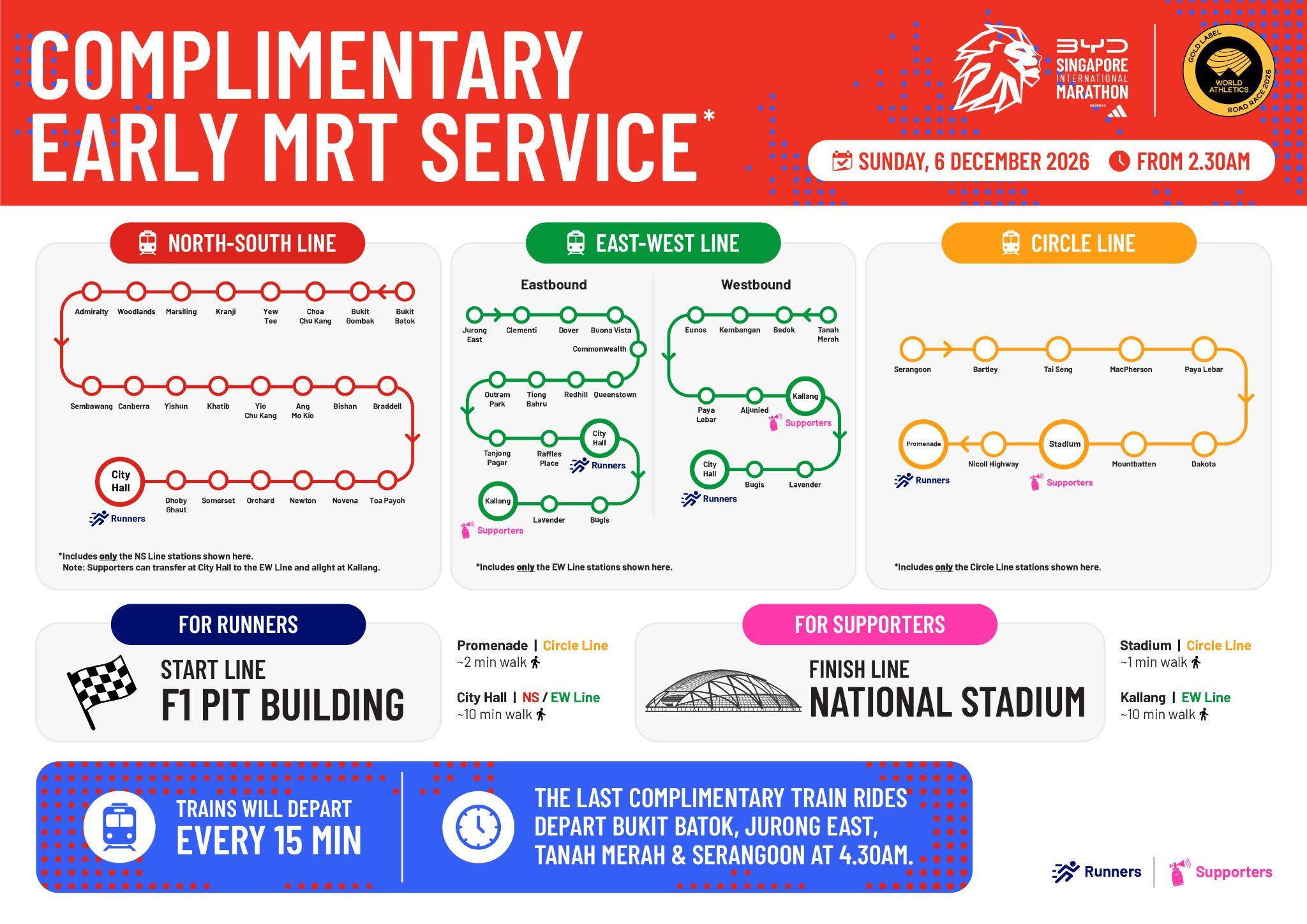
Under a Memorandum of Understanding (MOU) established between SGIMPL and Stellar Ace, a business arm of SMRT Corporation Ltd, selected sections along three MRT lines will open earlier than usual, providing greater convenience and access to runners getting to the start line at the F1 Pit Building for the BYD Marathon. The early hours MRT service will run from 2.30am to 4.30am on Sunday, 6 December, on the North-South, East-West and Circle Lines. The trains will run at 15-minute intervals and the rides will be complimentary for all runners and their supporters. The last complimentary train ride will depart from Bukit Batok, Jurong East, Tanah Merah and Serangoon stations at 4.30am.

Please refer to the appended factsheet for information on which stations will be open and other route details.

Paid shuttle buses will also run across race weekend for participants without direct MRT access. More information will be announced on the official website closer to the date.

Lam Sheau Kai, President of SMRT Trains, saidโ€œSMRT is pleased to once again support this flagship marathon by starting our train services earlier at selected sections along three of our lines, helping runners, volunteers and supporters get to the race safely and conveniently before dawn. We are excited to bring back this service to facilitate one of Singaporeโ€™s most iconic sporting events.

Our teams will be preparing well in advance to ensure a smooth and reliable start to race day, and we look forward to getting participants from Singapore and around the world to the starting line. We wish everyone a safe, enjoyable and memorable race.โ€

Enhanced Safety: Medic Runners, a new layer of safety for runners

The safety of runners is SGIMPL’s top priority, and in 2026, that commitment goes further with the introduction of Medic Runners for the adidas Half Marathon and the BYD Marathon. Under this scheme, up to 200 Medic Runners with first-aid training will be out on the race course, adding to the overall safety and welfare programme. The programme had already drawn over 1,200 applicants, with approximately 20% of them healthcare professionals volunteering their time and expertise. Medic Runners will be identified by specialised bibs and will provide timely life-saving medical assistance when required, before SGIM’s professional medical teams get to the affected runners on course.

Runners who would like to be a part of the programme can submit their applications on the Medic Runners page at singaporeinternationalmarathon.com. Applicants must be experienced half-marathon or full-marathon runners and certified in CPR, AED and basic first aid. Selected Medic Runners must attend two training runs and refresher first-aid sessions prior to the race weekend. Recruitment for Medic Runners is open from now till mid-August 2026.

Shalindran Sathiyanesan, Event Director, SGIMPL, said: “Traffic congestion to the start line is a real concern, especially with an early flag-off. Marathons around the world provide runners with reliable transport, and we want to do the same for SGIM. We are very pleased to partner with SMRT and in this first year, we focused our support on the BYD Marathon, Singapore’s only Gold Label Race and National Marathon and our runners’ toughest distance, with paid shuttle buses supporting the adidas Half Marathon runners on Saturday. Safety remains our top priority, and Medic Runners are a further layer, another set of eyes on course alongside our medical teams, helping runners get support faster when needed.”

Wider reach: Race weekend at the National Stadium

This year, the entire race weekend, from race entry pack collection to the Race Expo to the finish line, is fully integrated within the Kallang precinct, in partnership with The Kallang Group. Race pack collection takes place at Arena Park while the Race Expo and the finish line for every distance except Kids Dash are held at the iconic National Stadium. Whether you’re picking up a race pack, hunting for exclusive merchandise, or just soaking in the atmosphere with family, the National Stadium becomes the place to be all weekend, runner or not.

For the first time, the Race Expo moves out of its traditional standalone format, integrated with the finish line, bringing the full race weekend experience under one roof.

Expect a Race Expo like never before, entry is free and all are welcome, with a full weekend of shopping, limited-edition collectibles, F&B options, and a carefully curated programme throughout, from athlete panel sessions to meet-and-greets with world-renowned professional athletes, to live bands keeping the energy high.

โ€œThe running community has always been part of the everyday rhythm of The Kallang. Weโ€™re proud to partner SGIM to bring the Race Expo and finish line together at the National Stadium this year. This allows us to transform race weekend into a shared celebration that extends beyond the runners to families, friends and the wider community,โ€ said Daryl Yeo, Chief Operating Officer and Chief Experience Officer, The Kallang Group. โ€œWe look forward to welcoming everyone to The Kallang and keeping the precinct pulsing with community spirit all weekend long.โ€

Bigger rewards: BYD SEALION 7 and exclusive perks available via Friends of SGIM

Another new introduction is the Friends of SGIM programme, a growing network of homegrown and local SMEs across F&B, wellness and recovery, offering exclusive perks to all registered runners. Participation in the Friends of SGIM programme is free for all SMEs and it reflects SGIM’s commitment to supporting local businesses by leveraging the race’s scale and reach to drive business to them.

To date, more than 20 homegrown businesses and local SMEs have confirmed their participation. Starting from 1 July till 31 December 2026, registered SGIM runners can enjoy discounts and promotions can enjoy exclusive discounts and promotions across a curated range of F&B, fitness and recovery partners, including household names such as Sarnies, Nylon Coffee Roasters,  Project Acai, Shelter, FORGED by RF and more. Runners can keep a lookout for the โ€œFriends of #SGIMโ€ decals at participating outlets, present their race ticket from their registration account and receive or redeem their exclusive perks. The full list of Friends of #SGIM is available at singaporeinternationalmarathon.com/friends-of-sgim/.

Dennis Tang, Co-founder, Nylon Coffee, said: “Running a small homegrown business is like running a never-ending marathon, each kilometre, each milestone is an achievement. We are proud to support the BYD Singapore International Marathon presented by adidas this December, fueling the participants with tasty coffees, one cup at a time.”

Every participant of the BYD Singapore International Marathon presented by adidas will also be automatically entered into a lucky draw and stand a chance to win a brand-new BYD SEALION 7, courtesy of title sponsor BYD. Registered runners across all categories, including the Kids Dash, will receive one entry while BYD Marathon and Crew Challenge entrants receive two entries, doubling their chances. The winner will be announced by 7 December.

Bigger rewards: New sponsors and partners on board for 2026

Several new sponsors and partners have come on board for 2026. They include The Westin Singapore, 100Plus, Heineken 0.0, Recogen, Rokeby, Sunday Shades, Sunpride, Walch, and more. The full list can be found on the appended factsheet. Additional sponsors and partners are expected to be confirmed ahead of race weekend.

Runners who sign up for this year’s marathon will receive a race pack with entitlements valued at up to S$175, expected to grow in value as more sponsors and partners come on board. Curated for performance and convenience, this yearโ€™s race pack includes items such as nasal strips, kinesiology tape, a reusable, foldable cup, an adidas participant tee, and a tote bag, along with other race essentials, with contents and value varying by race category. Partners will also bring their brands to life at the Race Expo, with activations and experiences for runners and visitors to enjoy across the weekend.

Leon Lai, Chief Executive Officer, SGIMPL, said: “This year’s programme was built with a key objective in mind – to involve the wider community, and to build an even bigger event, together. From SMRT opening the trains early, the Kallang Group opening up the National Stadium, BYD putting a car on the line, our sponsors and partners adding to what runners receive, to businesses across the island joining Friends of SGIM. It’s the whole of Singapore coming together to make this race what it is. That’s the marathon we want: one built by the whole of Singapore, for the whole of Singapore.โ€

The BYD Singapore International Marathon presented by adidas takes place 4 – 6 December 2026. Registration is open at singaporeinternationalmarathon.com and closes on 30 September 2026, or earlier if all entries are sold.*

*The organiser reserves the right to extend the registration period at its discretion.

Early Hours MRT Service on Sunday, 6 December 2026 (BYD Marathon)

DetailInformation
Operating hours2.30am to 4.30am
FrequencyEvery 15 minutes
FareComplimentary only between 2.30am to 4.30am. The last complimentary train ride departs Bukit Batok, Jurong East, Tanah Merah & Serangoon at 4.30am.
North-South LineSouthbound only, from Bukit Batok to City Hall
East-West LineBoth directions: eastbound from Jurong East to Kallang; westbound from Tanah Merah to City Hall
Circle LineClockwise direction, from Serangoon to Promenade
Closest station to start line (F1 Pit Building)Promenade (Circle Line)
Alternative alighting stationCity Hall (NS Line southbound / EW Line eastbound and westbound), walk to start

Race Categories and Schedule

RaceDateFlag-offStart PointFinish Line
BYD Marathon (42.195km)Sunday 6 December4.30amF1 Pit BuildingNational Stadium
adidas Half Marathon (21.0975km)Saturday 5 December4.30amF1 Pit BuildingNational Stadium
Standard Chartered 10kmFriday 4 December8.30pmF1 Pit BuildingNational Stadium
5kmFriday 4 December9.30pmF1 Pit BuildingNational Stadium
Kids Dash 1.6km (Competitive)Friday 4 December7.30amGreat Eastern PromenadeGreat Eastern Promenade
Kids Dash 1.6km (Non-Competitive)Friday 4 December8.00amGreat Eastern PromenadeGreat Eastern Promenade
Kids Dash 600m (0โ€“3 years)Friday 4 December10.00amGreat Eastern PromenadeGreat Eastern Promenade
Kids Dash 600m (4โ€“6 years)Friday 4 December10.30amGreat Eastern PromenadeGreat Eastern Promenade
Kids Dash 600m (7โ€“9 years)Friday 4 December11.30amGreat Eastern PromenadeGreat Eastern Promenade

Runner Entitlements and Race Pack

CategoryValueContents
BYD Marathon & Crew ChallengeWorth up to S$175Tote bag, bib buttons, nasal strips, kinesiology tape, foldable cup, adidas Participant Tee, adidas Finisher Tee, finisher medal
adidas Half Marathon, Standard Chartered 10km & 5kmWorth up to S$125Tote bag, bib buttons, nasal strips, kinesiology tape, foldable cup, adidas Participant Tee, adidas Finisher Tee, finisher medal
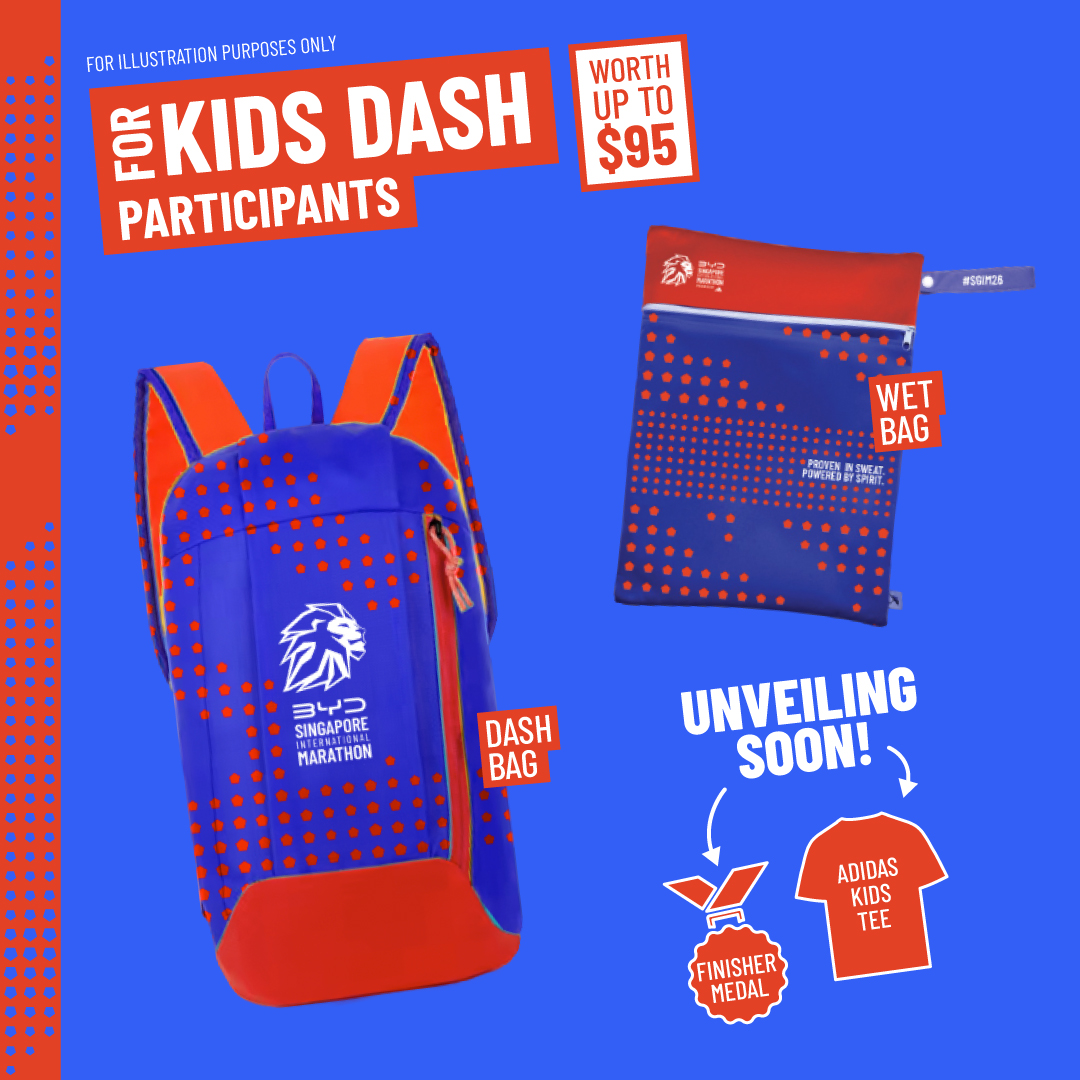
Kids DashWorth up to S$95Dash bag, wet bag, adidas Kids Tee, finisher medal

Note: entitlements are expected to grow as more sponsors are confirmed ahead of race weekend.

Sponsors and Partners (As of 31 July 2026)

SponsorTitle/ Naming SponsorDesignation
BYDBYD MarathonTitle Sponsor & Official Car
adidasadidas Half MarathonPresenting Sponsor & Official Apparel and Footwear
Standard CharteredStandard Chartered 10kmOfficial Bank
Embed Financial Group Holdings (EFGH)EFGH National ChampionshipsOfficial Finternet
The Kallangย –Official Venue
The WestinSingaporeย –Official Professional Field Hotel
100Plusย –Official Hydration
Heineken 0.0ย –Official 0.0
Recogenย –Official Joint, Bone and Muscle Supplement
Rokebyย –Official Protein Smoothie
Sunday Shadesย –Official Sunglasses
Sunprideย –Official Banana
Walchย –Official Hygiene
Official Partner
Key Power Sports
Live Long Long
MILO
Stellar Ace

Friends of SGIM

DetailInformation
LaunchNew for 2026
ConceptA city-wide network of homegrown F&B, wellness and recovery businesses offering exclusive perks to registered SGIM participants
PurposeConnects the event with Singapore’s local business community: participating SMEs engage with runners and spectators before and during race weekend, gaining visibility and footfall, while the race experience extends beyond the course into the everyday spaces where runners train, recover and gather.
Cost to businessesFree for participating businesses to join
How it worksFind participating outlets by the Friends of SGIM decal; show race ticket from registration account; enjoy the perk
Confirmed F&B partners (as of 31 July)Bombay Garden, Buzzed Coffee Bar, Chickata Cafe, Diff Specialty, Harvest Salad & Protein Bowl, Monk’s Brew Club, Nylon, PPP Coffee, Project Acai, Santis Pizza and Produce, Sarnies, Small Batch, Space 23, Supergreen
Wellness/recovery partnersShelter, FORGED by RF, Physio and Sole Clinic, Feet First Podiatry, Fine Podiatry Clinic, Atlas Podiatry, Emerald Hill Podiatry
Full list and mapsingaporeinternationalmarathon.com/friends-of-sgim/
Enquiries for businesses[email protected]

This factsheet consolidates publicly announced information on SGIM26 as of the time of writing. For the latest details, visitย singaporeinternationalmarathon.com.

Pikachu Is Coming to The Kallang: Registration Opens for Pokรฉmon RUN 30 โ€“ Singapore Edition

Singapore, Tuesday 28 July 2026 โ€“ The wait is almost over, Trainers. Registration for the Pokรฉmon RUN 30 โ€“ Singapore Edition is open and for the first time as part of Pokรฉmonโ€™s global 30th anniversary celebrations, Pokรฉmon RUN 30 Singapore Edition is bringing a weekend of Pokรฉmon-themed experiences, photo opportunities, family fun and outdoor adventure to The Kallang on 7 and 8 November 2026. 

More than just a 4KM adventure route, Pokรฉmon RUN 30 Singapore Edition invites participants to step into a world inspired by one of the most beloved entertainment franchises of all time. Whether you’re a longtime Trainer who grew up with Pikachu, a dedicated Pokรฉmon GO player, or a parent introducing Pokรฉmon to a new generation, it’s a weekend filled with fun, discovery and memorable moments.

The event is designed for participants of all ages, making it a perfect activity for families, friends, Pokรฉmon GO communities and fans looking to celebrate three decades of Pokรฉmon together. After all, Pokรฉmon only turns 30 once. 

โœจ WHAT TO EXPECT 

Participants can look forward to: 

  • A 4KM Pokรฉmon-themed adventure through The Kallangย 
  • Iconic Pokรฉmon photo opportunities and share-worthy moments
  • Pokรฉmon-inspired installations and interactive experiencesย 
  • Special Pikachu stage appearances and in-game experiences
  • Festival-style entertainment and activities at the event village
  • Official participant jersey and commemorative Pokรฉmon RUN 30 Finisher Medalย 

๐Ÿ“ EVENT DETAILSย 

Official Event Name:ย 
Pokรฉmon RUN 30 Singapore Editionย 

Registration Opens:ย 
28 July 2026ย 

Event Dates:ย 
7โ€“8 November 2026ย 

Venue:ย 
Stadium Roar, The Kallang, Singaporeย 

Distance:ย 
4KM Adventure Route

๐ŸŽŸ REGISTRATION FEESย 

Early Bird Normal Late Entry
Limited to 3,000 slots only
$118 $138 $158
+ $22 for an exclusive plushie (limited to a maximum of 3 plushies per participant)

๐ŸŒ REGISTRATION LINKย 

Registration is live here

Running Stronger for Longer: Age-Proofing Your Fitness Routine

People often think running is just for young folks, but honestly, the finish line doesn’t care how old you are. If you’ve got the right attitude and make a few smart tweaks, running can keep you strong, happy, and full of life well into your 50s, 60s, 70s, and beyond. “Age-proofing” your fitness isn’t about stopping; it’s about changing things up so you can keep logging those miles happily and healthily for years. This means understanding how your body naturally changes over time so you can adjust your training and recovery, as these tips for ageing runners discuss.

Embracing the Joys of Senior Running

The good stuff you get from running doesn’t go away as you get older. In fact, it can become even more important. For older athletes, running is a fantastic way to keep your heart healthy, manage your weight, and strengthen your bones. And beyond the physical benefits, that clear-headed feeling you get from a good run is priceless. It’s your dedicated time, like a moving meditation that can melt away stress and lift your spirits. Plus, it’s a great way to stay connected with people, whether you’re meeting a friend or just sharing a knowing nod with another runner on the path.

Training Adjustments for Mature Athletes

As your body changes, your training should too. What worked in your 20s might not be the best plan in your 60s. The trick is to train smarter, not necessarily harder.

  • Warm-ups and Cool-downs are a Must: Your muscles and joints need more time to warm up and cool down. Make your warm-up at least 10-15 minutes of light jogging and dynamic stretches. A good cool-down is just as important for recovery.
  • Mix in Other Activities: Give your joints a break by adding low-impact stuff like swimming, cycling, or using an elliptical. This keeps your heart fit without all the repetitive pounding of daily running.
  • Get Stronger: Lifting weights is super important for maintaining your muscle mass and bone density. Just two sessions a week focusing on your main muscle groups can really improve your running efficiency and help prevent injuries.
  • Listen to Your Body: This is the golden rule. You might need more rest days. If something feels off, don’t push through it. Taking a day off is way better than being out of commission for weeks with an injury.

Prioritising Safety on Every Run

Staying safe lets you run with confidence. Simple habits like telling someone your route and when you expect to be back, wearing bright or reflective clothes, and being aware of your surroundings are basic for any runner. For older athletes, a few extra things can add another layer of security.

Running on well-kept, familiar paths can lower your chances of tripping or falling. Always carry your phone in case of an emergency. For extra peace of mind, especially on solo runs in quieter areas, some runners look into personal alert systems. For folks in certain places, options like senior monitoring devices in Canada offer a special way to call for help with just a button push if you feel unwell or take a tumble.

Nutrition and Recovery Essentials

Recovery is where you actually build strength, and for older runners, it’s just as important as the run itself. Your body needs enough fuel and rest to fix itself and get stronger. Pay close attention to staying hydrated, drinking plenty of water all day, not just around your runs.

What you eat is super important for staying strong. Make sure you’re getting enough protein to help your muscles repair and maintain themselves. Many experts suggest that active older adults need more protein than less active adults. Think lean meats, fish, beans, and dairy. And don’t forget about sleep. Aim for 7-9 hours of good sleep each night, because that’s when your body does most of its healing. Gentle stretching or using a foam roller can also help soothe sore muscles and increase flexibility.
Building a Support System for Active Ageing

You don’t have to do it all by yourself. Running can be a wonderful social activity that keeps you motivated and accountable. Look for local running clubs that have groups for older athletes or different pace levels. Having a scheduled run with a buddy makes it much harder to skip a workout when you’re not feeling it. 

These communities offer more than just training partners; they bring friendship, encouragement, and a shared understanding of the unique ups and downs of running as an older athlete. If an in-person group isn’t an option, there are lots of lively online communities where you can share tips and celebrate your progress.

Running is a gift that keeps on giving throughout your life. By listening to your body, training smart, and putting safety first, you can make sure you enjoy every stride for many years to come.

Shoulder Pain? Try These 5 Simple Stretches and Exercises for Lasting Relief

Shoulder pain is one of the most common musculoskeletal complaints, affecting everyone from office workers and gym enthusiasts to parents carrying young children. Because the shoulder is the body’s most mobile joint, it is also one of the most vulnerable to strain, overuse, and injury.

The good news is that not every sore shoulder requires medication or surgery. In many cases, simple stretches and strengthening exercises can help reduce discomfort, improve mobility, and restore normal function.

However, not all shoulder pain is the same. Before beginning any exercise programme, it’s important to understand when exercise can helpโ€”and when it may be time to seek medical advice.

Here’s what you need to know about relieving shoulder pain safely, along with five effective exercises recommended by healthcare professionals.

Understanding Why Your Shoulder Hurts

The shoulder is made up of muscles, tendons, ligaments, bones, and joints working together to provide an impressive range of motion. This complexity also means there are many potential causes of pain.

Common causes include:

  • Poor posture from prolonged sitting
  • Muscle tightness
  • Rotator cuff irritation
  • Tendon inflammation
  • Frozen shoulder
  • Shoulder impingement
  • Overuse from sports or repetitive work

Minor aches often improve with rest, gentle movement, and targeted exercises. However, sudden injuries, severe pain, or symptoms following a fall should always be assessed by a healthcare professional.

Why Movement Matters

When your shoulder hurts, avoiding movement may seem like the obvious solution. In reality, complete rest can sometimes make the problem worse.

Gentle stretching helps reduce stiffness, while strengthening exercises improve the muscles that support the shoulder joint. Together, they can restore mobility, improve posture, and reduce the likelihood of future pain.

The key is to move within a comfortable range. Exercises should never produce sharp or worsening pain. Mild stretching discomfort is acceptable, but persistent pain is a sign to stop and seek professional advice.

1. Pendulum Stretch

One of the gentlest exercises for a painful shoulder is the pendulum stretch.

Lean forward with one hand supported on a table or chair while allowing the affected arm to hang freely. Slowly move the arm in small circles before changing direction. You can also gently swing it forward, backward, and side to side.

This movement helps lubricate the shoulder joint while reducing stiffness without placing excessive stress on the muscles.

Perform the exercise for about one minute in each direction.

2. Cross-Body Shoulder Stretch

This stretch targets the muscles at the back of the shoulder.

Bring one arm across your chest and use the opposite hand to gently pull it closer to your body until you feel a comfortable stretch behind the shoulder.

Hold the position for 20 to 30 seconds before relaxing. Repeat several times on each side.

The cross-body stretch can help improve flexibility and relieve tightness caused by prolonged desk work or repetitive overhead movements.

3. Doorway Chest Stretch

Many cases of shoulder discomfort are linked to rounded shoulders and poor posture.

Standing in a doorway, place your forearms against the door frame with your elbows bent at approximately 90 degrees. Step one foot forward until you feel a gentle stretch across the chest and the front of your shoulders.

Hold for 20 to 30 seconds before returning to the starting position.

By improving chest flexibility, this exercise encourages better posture and reduces unnecessary strain on the shoulder joints.

4. Wall Crawls

Wall crawls help restore shoulder mobility without forcing the joint beyond its comfortable range.

Face a wall and slowly “walk” your fingers upward as high as you comfortably can. Pause briefly before gradually walking your fingers back down.

Repeat the movement several times.

As flexibility improves, you’ll often notice you can reach a little higher each week without increasing discomfort.

This exercise is commonly recommended during recovery from shoulder stiffness and mild mobility limitations.

5. External Rotation with a Resistance Band

Once pain begins to settle, strengthening becomes equally important.

Attach a resistance band to a secure anchor. Keeping your elbow close to your side and bent at 90 degrees, slowly rotate your forearm outward before returning to the starting position under control.

This exercise strengthens the rotator cuff muscles, which play a vital role in stabilising the shoulder during daily activities and sports.

Start with light resistance and focus on smooth, controlled movements rather than heavy loads.

Simple Habits That Support Shoulder Health

Exercises work best when combined with healthy daily habits.

Consider these tips:

  • Avoid sitting in the same position for extended periods.
  • Adjust your workstation to encourage good posture.
  • Take regular movement breaks during the day.
  • Warm up before exercise or sports.
  • Strengthen your upper back and shoulder muscles regularly.
  • Avoid carrying excessively heavy bags on one shoulder.

Small lifestyle changes often make a significant difference in preventing recurring shoulder pain.

When Should You See a Doctor?

While many cases improve with conservative treatment, some symptoms require prompt medical attention.

Seek professional advice if you experience:

  • Sudden severe pain following an injury
  • Shoulder deformity
  • Significant swelling
  • Inability to lift your arm
  • Numbness or weakness
  • Persistent pain lasting several weeks despite home care
  • Night pain that regularly disturbs sleep

Early diagnosis can prevent minor problems from developing into chronic shoulder conditions.

Consistency Is More Important Than Intensity

One of the biggest mistakes people make is trying to stretch too aggressively or progressing too quickly.

Shoulder rehabilitation is rarely about pushing through pain. Instead, it is built on gentle, consistent movement performed several times each week.

Many people notice gradual improvements in flexibility, strength, and pain levels after several weeks of regular exercise. Patience is key, as tissues need time to heal and adapt.

Keep Your Shoulders Moving for Life

Healthy shoulders make everyday activitiesโ€”from reaching into cupboards and lifting groceries to playing sports and exercisingโ€”feel effortless.

The good news is that many common causes of shoulder pain respond well to simple stretches, strengthening exercises, and improved posture. By incorporating these five movements into your weekly routine and listening to your body’s signals, you can reduce discomfort, improve mobility, and lower the risk of future shoulder problems.

If pain persists or worsens, don’t ignore it. Early assessment and appropriate treatment can help you return to the activities you enjoy sooner, keeping your shoulders strong, mobile, and pain-free for years to come.

Run for a Cause: Why You Should Join the Yellow Ribbon Run 2026

Every run tells a story. Some are about chasing a personal best, while others are about crossing a bucket-list marathon off the calendar. But a handful of races leave a lasting impact that extends well beyond the finish line.

The Yellow Ribbon Run 2026 is one such event.

Returning on 20 September 2026 at The Kallang, Singapore’s largest movement supporting the Yellow Ribbon Project once again invites runners, families, and the wider community to come together for a meaningful cause. Whether you choose the 10km, 5km, or the family-friendly 888m Parent-Child Run, every step you take represents your support for giving ex-offenders a second chance and helping them reintegrate into society.

Even better, participants who register before 31 July 2026 can enjoy early bird rates, making now the perfect time to secure your place.

Sign up here

More Than Just Another Running Event

The Yellow Ribbon Run is unlike most road races.

While participants still enjoy the excitement of race day, finisher medals, and the satisfaction of completing their chosen distance, the event carries a deeper purpose.

Organised as part of the Yellow Ribbon Project, the run seeks to raise awareness about the importance of community support in helping ex-offenders rebuild their lives after incarceration. Employment opportunities, acceptance, and encouragement from society all play an important role in reducing reoffending and enabling successful reintegration.

By participating in the run, every runner becomes part of a nationwide movement promoting acceptance instead of stigma, and hope instead of judgement. The event reminds us that everyone deserves the opportunity to make positive changes and contribute meaningfully to society.

Choose the Distance That Suits You

One of the biggest attractions of the Yellow Ribbon Run is its accessibility.

Whether you are an experienced runner or someone participating in your very first running event, there is a category designed for you.

10km Run

The 10km category is ideal for runners seeking a more challenging race. It offers enough distance for seasoned runners looking to test their endurance while remaining achievable for recreational runners who have been training consistently.

If you are preparing for a half marathon or simply enjoy longer weekend runs, the 10km is an excellent choice.

5km Run

For many participants, the 5km category strikes the perfect balance between challenge and enjoyment.

It is beginner-friendly, suitable for casual joggers, and ideal for those returning to fitness after a break. Many workplaces, schools, and running groups also choose the 5km as a fun team activity.

888m Parent-Child Run

Families can also be part of the celebration through the 888m Parent-Child Run.

Designed to encourage parents and children to stay active together, this category focuses on creating memorable experiences rather than competition. It provides a wonderful opportunity for children to experience the excitement of race day while promoting healthy lifestyles from a young age.

The symbolic distance also reflects the event’s inclusive spiritโ€”running together, supporting one another, and celebrating every participant regardless of age or ability.

The Parent-Child Run is an 888m run for children aged 4 to 12 years old, accompanied by a parent or guardian.

The Parent-Child Run will be held at the Great Eastern Promenade, a fully sheltered sports and recreational space around the National Stadium. This provides families with a comfortable, safe and meaningful way to take part in the Yellow Ribbon Run together.

Through this category, we aim to engage our younger generation and introduce them to the Yellow Ribbon Projectโ€™s message of second chances, inclusivity and community support.

Every Step Supports Second Chances

The Yellow Ribbon Run is built on a simple but powerful message: everyone deserves a second chance.

Many former offenders face significant challenges after their release, including difficulties finding employment, rebuilding relationships, and regaining confidence.

Community support plays a crucial role in helping them succeed.

When people choose acceptance over prejudice, they help create opportunities for individuals to become productive members of society once again. The Yellow Ribbon Project has spent years advocating this message, encouraging Singaporeans to “unlock the second prison” by removing the social barriers that continue long after a prison sentence has ended.

By joining the run, participants demonstrate that rehabilitation is a shared community responsibility rather than something left solely to correctional institutions.

Sign up here

A Meaningful Event for Families, Friends and Companies

One of the unique aspects of the Yellow Ribbon Run is the diversity of participants.

Every year, the event attracts:

  • Families enjoying an active morning together
  • Recreational runners
  • Competitive athletes
  • Corporate teams
  • Schools and youth organisations
  • Community groups
  • Individuals running in support of loved ones

This inclusive atmosphere creates an uplifting race-day experience where participation matters more than finishing position.

For many organisations, taking part has also become an annual corporate social responsibility activity that promotes teamwork while supporting an important national cause.

Join us on 20 September for a day of exciting game booths, interactive activities and meaningful experiences at the Carnival at Yellow Ribbon Run.

Bring your family and friends and enjoy a range of engaging activities, including our Journey of Desistance exhibition, where you can learn more about rehabilitation, reintegration and the power of second chances.

Bonus: Win exclusive Yellow Ribbon Project collaterals when you participate in our Claw Machine activity!

From 14 to 20 September 2026 at Kallang Wave Mall Atrium, explore an immersive exhibition that brings to life the challenges, turning points and support systems that shape successful reintegration.

Through interactive experiences and inspiring stories, discover how individuals rebuild their livesโ€”and how each of us can play a role in creating opportunities for second chances.

As part of the exhibition, visit the Yellow Ribbon Project Pop-Up Store, featuring cookies, coffee, baked goods and artworks created by inmates and desistors. More than a retail experience, it offers a tangible way to support second chances and witness stories of resilience in action.

Experience the Energy at The Kallang

With its vibrant sporting heritage, The Kallang provides an exciting backdrop for one of Singapore’s most meaningful running events.

Participants can look forward to an energetic race-day atmosphere filled with fellow runners, cheering supporters, entertainment, and community activities. Whether you are chasing a new personal best or simply enjoying the experience with family and friends, the event offers something for everyone.

Beyond the race itself, participants become part of a movement that celebrates resilience, hope, and positive change.

Register Early and Save

If you’ve been considering joining this year’s event, now is the best time to commit.

Early bird registration ends on 31 July 2026, allowing participants to enjoy discounted registration fees before standard rates apply. Registering early also provides ample time to prepare for your chosen distance, whether you’re aiming to complete your first 5km or improve your 10km performance.

Training for the event can become a rewarding journey in itself, encouraging healthier habits while building anticipation for race day.

Sign up here

Why You Shouldn’t Miss Yellow Ribbon Run 2026

There are countless running events throughout the year, but few combine fitness, family, community, and social impact as meaningfully as the Yellow Ribbon Run.

You’ll not only enjoy:

  • A professionally organised running event
  • Distances suitable for all ages and fitness levels
  • A fun and vibrant race-day atmosphere
  • Exclusive event entitlements and finisher rewards

You’ll also be supporting a cause that encourages compassion, inclusion, and second chances.

Sometimes the most memorable finish lines are not defined by the time on your watch but by the difference your participation makes.

Run Towards Hope

Every stride has the power to inspire change.

On 20 September 2026, thousands of participants will gather at The Kallang to run not only for themselves but also for a more inclusive Singaporeโ€”one where individuals who have served their sentences are given the opportunity to rebuild their lives with dignity and support.

Whether you choose the 10km, 5km, or the heartwarming 888m Parent-Child Run, your participation sends a powerful message that everyone deserves the chance to start again.

Don’t wait too longโ€”early bird registration closes on 31 July 2026.

Lace up your running shoes, invite your family and friends, and be part of a movement that proves every step can make a difference.

Categories & Pricing

  • Early Bird Rates: By 31 July 2026
  • Registration Period: 28 May โ€“ 31 August 2026

Donโ€™t miss the chance to support the cause!

Entitlements

Run Routes

Sign up here

Podium Prizes

Support Yellow Ribbon Run 2026!

HOKA Skyward X 2 Review: Super Shoe Technology Meets Everyday Comfort

In a running world obsessed with race-day super shoes and personal bests, it’s easy to forget that most miles are not run at race pace.

Most runners spend the majority of their training time building aerobic fitness through easy and steady runs. These are the miles that form the foundation of marathon training, half-marathon preparation, and long-term running development. They are also the miles that can leave your legs feeling freshโ€”or completely batteredโ€”depending on your choice of footwear.

Enter the HOKA Skyward X 2.

Positioned as one of HOKA’s most premium road running shoes, the Skyward X 2 combines maximum cushioning, a suspension-inspired midsole design, and a carbon-fibre plate in a package designed not for speed records, but for making long miles feel easier and more enjoyable.

With its striking Grout/Cobalt colourway and futuristic silhouette, the Skyward X 2 certainly looks the part. But does it deliver where it matters most?

We took a closer look.

First Impressions

The first thing you’ll notice about the Skyward X 2 is its sheer presence.

This is not a subtle shoe.

The towering stack height immediately signals that comfort is the priority. Yet despite its maximalist appearance, the shoe doesn’t feel clunky. Instead, it gives the impression of a premium road cruiser designed to smooth out imperfections in the road.

The Grout/Cobalt colourway adds a sophisticated touch. The combination of muted grey tones with vibrant cobalt accents creates a modern aesthetic that stands out without being overly flashy.

Slip the shoe on, and the comfort is apparent from the first step.

The engineered upper provides a secure lockdown while remaining breathable, and the plush collar contributes to an immediately luxurious feel. Everything about the shoe suggests that it was designed with long-distance comfort in mind.

A Different Kind of Carbon-Plated Shoe

When runners hear the words “carbon plate,” thoughts often turn to racing shoes designed to chase personal bests.

The Skyward X 2 takes a different approach.

Rather than creating an aggressive race-day weapon, HOKA uses the carbon-fibre plate as part of a broader cushioning system. The plate works alongside the dual-layer foam construction to create a smooth and stable ride, helping runners transition efficiently from heel strike to toe-off.

The result isn’t explosive propulsion.

Instead, the shoe delivers a controlled rolling sensation that encourages a relaxed stride during easy and steady-paced efforts.

This distinction is important.

The Skyward X 2 isn’t trying to replace your racing shoe. It’s designed to make everyday training miles feel less demanding on the body, allowing runners to accumulate volume with greater comfort and less fatigue.

Comfort That Encourages Longer Runs

The standout feature of the Skyward X 2 is undoubtedly its cushioning.

Every footstrike feels heavily protected from road impact. Whether you’re running on asphalt, concrete footpaths, or park connectors, the shoe absorbs shock exceptionally well.

For runners preparing for half marathons, marathons, or ultramarathons, this level of protection can make a noticeable difference during high-volume training weeks.

The cushioning remains remarkably consistent throughout the run. Instead of feeling overly soft or unstable, it provides a balanced ride that combines plushness with support.

Long runs that would normally leave your legs feeling beaten up become noticeably more manageable.

The shoe almost encourages you to keep going.

That’s perhaps the highest compliment a long-run shoe can receive.

Stability in a Maximalist Package

One challenge faced by many highly cushioned shoes is stability.

More foam often means more movement, particularly when fatigue sets in during longer efforts.

HOKA addresses this issue impressively with the Skyward X 2.

The wide platform, combined with the integrated carbon-fibre plate, creates a surprisingly stable ride despite the substantial stack height. Cornering feels controlled, and the shoe remains predictable even as pace fluctuates throughout a run.

This makes the Skyward X 2 particularly appealing to runners who want maximum cushioning without sacrificing confidence underfoot.

While it won’t provide the structured support of a traditional stability shoe, it feels reassuringly planted for a max-cushioned trainer.

Best for Long and Steady Miles

The Skyward X 2 performs best when allowed to settle into its intended rhythm.

Easy runs.

Recovery runs.

Steady aerobic sessions.

Weekend long runs.

This is where the shoe excels.

The smooth rocker geometry promotes efficient forward motion, while the generous cushioning helps reduce cumulative fatigue over longer distances.

Runners who enjoy cruising comfortably through 15km, 20km, or even 30km training sessions will appreciate what the Skyward X 2 brings to the table.

Can it handle faster efforts?

Certainly.

But there are lighter and more responsive options within HOKA’s lineup for interval sessions and race-day performance. The Skyward X 2 truly shines when comfort takes precedence over outright speed.

Who Should Consider the Skyward X 2?

The Skyward X 2 is ideal for:

  • Marathon and half marathon runners building weekly mileage
  • Runners seeking maximum comfort for long road runs
  • Athletes recovering from high-intensity workouts
  • Heavier runners looking for enhanced cushioning
  • Anyone who prioritises comfort and protection over speed

It may be less suitable for runners who prefer a more connected ground feel or those seeking a lightweight shoe for interval training and racing.

Verdict

The HOKA Skyward X 2 occupies a unique space in the running shoe market.

It borrows technology from modern super shoes but applies it in service of comfort rather than outright performance. The result is a premium trainer that transforms long and steady runs into a remarkably enjoyable experience.

For runners logging significant road mileage, few shoes currently offer the same combination of cushioning, stability, and cruising efficiency.

The Skyward X 2 won’t necessarily make you faster overnight.

What it may do, however, is make you look forward to your next long runโ€”and that’s often far more valuable.

Rating: 9/10

Pros

  • Exceptionally comfortable cushioning
  • Smooth and efficient ride
  • Stable for a max-cushioned shoe
  • Excellent for long and steady runs
  • Premium upper and overall build quality

Cons

  • Premium price point
  • Heavier than performance-oriented trainers
  • Not ideal for speedwork or racing

Bottom Line: The HOKA Skyward X 2 is a luxury cruiser built for runners who value comfort, protection, and effortless long-distance miles. If your training revolves around long road runs and aerobic development, this may be one of the most enjoyable shoes you’ll wear all year.

* Disclaimer: This review represents the genuine, unbiased views of the author. The author was provided with a free unit. HOKA’s products have been and might currently be advertised on JustRunLah! via different channels, however, these relationships do not influence the editorial content of reviews.

HOKA Speedgoat 7 Tested: Comfort, Grip and Confidence for Every Trail

For trail runners, few shoe names carry as much weight as the HOKA Speedgoat.

Named after ultrarunning legend Karl “Speedgoat” Meltzer, the series has built a reputation for delivering exceptional comfort, reliable traction, and confidence across a wide variety of terrain. Whether you’re tackling technical mountain trails, muddy jungle paths, or long-distance ultramarathons, the Speedgoat has become a trusted companion for runners around the world.

Now in its seventh iteration, the HOKA Speedgoat 7 arrives with a familiar mission: to remain the benchmark trail shoe for everyday trail runners and adventure seekers.

But with an increasingly competitive trail running market, does the latest Speedgoat still deserve its crown?

We took a closer look.

First Impressions

At first glance, the Speedgoat 7 doesn’t stray too far from the formula that made its predecessors successful.

The shoe retains its signature maximalist appearance, featuring a substantial stack of cushioning and an aggressive Vibramยฎ Megagrip outsole. Yet despite its rugged look, it feels surprisingly light in hand.

Slip it on, and the first thing you’ll notice is the comfort.

The upper wraps the foot securely without feeling restrictive, while the padded collar and tongue contribute to a premium fit. HOKA has refined the upper construction to provide a more accommodating fit, addressing feedback from runners who found previous versions slightly narrow in certain areas.

The result is a shoe that feels trail-ready straight out of the box.

Cushioning Built for Long Adventures

One of the defining characteristics of the Speedgoat series has always been its generous cushioning, and the Speedgoat 7 continues that tradition.

The midsole provides ample protection from rocks, roots, and uneven surfaces while maintaining enough responsiveness to keep runners moving efficiently.

For trail runners spending several hours on their feet, this cushioning becomes particularly valuable.

Whether you’re training for your first trail half marathon, tackling a 50-kilometre ultra, or enjoying a weekend adventure on your favourite forest trails, the shoe delivers a forgiving ride that helps reduce fatigue over longer distances.

Importantly, the cushioning never feels overly soft or unstable. There’s enough firmness to maintain control on technical terrain while still delivering the plush comfort that HOKA fans have come to expect.

Traction You Can Trust

Trail running shoes live and die by their grip.

Fortunately, the Speedgoat 7 continues to excel in this department.

The Vibramยฎ Megagrip outsole remains one of the best in the trail running industry, offering dependable traction across a wide range of surfaces. From loose gravel and dirt paths to rocky descents and muddy sections, the shoe inspires confidence with every step.

The lug pattern bites effectively into soft terrain while maintaining sufficient contact on harder surfaces.

For runners navigating unpredictable trail conditions, this versatility is a major strength. Instead of worrying about your footing, you can focus on enjoying the run and tackling the terrain ahead.

It’s the kind of grip that encourages you to run more aggressively, particularly on technical descents where confidence can make all the difference.

Stability Without Sacrificing Comfort

One concern often associated with highly cushioned shoes is stability.

After all, more foam can sometimes mean a less secure ride.

Thankfully, HOKA has managed to strike a sensible balance with the Speedgoat 7.

The platform feels planted and predictable, allowing runners to navigate uneven terrain without constantly fighting the shoe. The wide base provides reassurance on off-camber sections, while the secure upper helps keep the foot locked in place during sharp turns and steep descents.

While it may not feel as nimble as a lightweight racing trail shoe, it offers significantly more comfort and protection for daily training and long-distance adventures.

For most recreational trail runners, that trade-off will be well worth it.

Who Is It For?

The Speedgoat 7 is not a specialist shoe designed for one specific purpose.

Instead, it excels as a versatile trail running workhorse.

It is ideal for:

  • Trail running beginners seeking confidence and comfort
  • Intermediate runners training for trail races
  • Ultramarathon runners covering long distances
  • Hikers looking for a cushioned and capable trail shoe
  • Adventure runners exploring mixed terrain

The shoe performs particularly well over medium to long distances where comfort and protection become increasingly important.

If your idea of a perfect weekend involves disappearing into the trails for several hours, the Speedgoat 7 is built for exactly that.

Where It Falls Short

No shoe is perfect, and the Speedgoat 7 is no exception.

Runners who prioritise speed and agility above all else may find it slightly less responsive than dedicated trail racing shoes. The generous cushioning, while excellent for comfort, can feel excessive for short and fast efforts.

Similarly, athletes competing in highly technical mountain races may prefer a lower-profile shoe that offers more precise ground feel.

However, these limitations are largely a reflection of the shoe’s intended purpose. The Speedgoat 7 is designed to maximise comfort, confidence, and versatility rather than chase podium finishes.

Verdict

The HOKA Speedgoat 7 doesn’t reinvent the wheel, and that’s precisely why it works.

Instead of making radical changes, HOKA has refined an already successful formula, delivering a shoe that remains exceptionally capable across a broad range of trail running scenarios.

Comfortable, protective, grippy, and dependable, the Speedgoat 7 continues to be one of the easiest trail shoes to recommend to runners of all experience levels.

Whether you’re preparing for your next trail race, training for an ultramarathon, or simply looking for a reliable companion for weekend adventures, the Speedgoat 7 delivers exactly what most trail runners need.

The king of the trails may face more challengers than ever before, but for now, it remains firmly on the throne.

Rating: 8.5/10

Pros

  • Excellent all-day comfort
  • Outstanding Vibramยฎ Megagrip traction
  • Protective cushioning for long distances
  • Stable and confidence-inspiring ride
  • Versatile across a variety of trail conditions

Cons

  • Not the fastest trail racing shoe
  • Less ground feel than lower-profile alternatives
  • Maximal cushioning may not suit every runner

Bottom Line: The HOKA Speedgoat 7 remains one of the best all-round trail running shoes available today, combining comfort, traction, and durability into a package that’s ready for everything from local trails to ultramarathon adventures.

* Disclaimer: This review represents the genuine, unbiased views of the author. The author was provided with a free unit. HOKA’s products have been and might currently be advertised on JustRunLah! via different channels, however, these relationships do not influence the editorial content of reviews.

Pokรฉmon RUN 30 Is Coming to Singapore โ€” And Across Asia

If you were around for the early days of Pokรฉmon GO events in Singapore, you might remember the Pokรฉmon Run SG back in 2017 โ€” Southeast Asia’s first Pokรฉmon-themed fun run, which returned in 2018 as the Pokรฉmon Run Carnival. Those were genuinely fun events, and it seems the format has been revived in a bigger way.

Pokรฉmon RUN 30 is a series of in-person Pokรฉmon GO events rolling out across Asia through late 2026 and into early 2027. The “30” is a nod to the franchise’s 30th anniversary. Singapore’s date is November 7โ€“8, 2026, at Kallang.

Where and When

  • Philippines โ€” October 3โ€“4 / SM Mall of Asia
  • Taiwan โ€” October 17โ€“18 (Taichung), October 31โ€“November 1 (Kaohsiung), November 14โ€“15 (New Taipei)
  • Singapore โ€” November 7โ€“8 / The Kallang
  • Malaysia โ€” TBD
  • Indonesia โ€” December 12โ€“13 / GBK, Jakarta
  • Thailand โ€” January 9โ€“10, 2027 / TBD
  • Hong Kong โ€” January 23โ€“24, 2027 / Science Park

What’s In It at the Event

Within the event area, you’ll get boosted wild spawns of all the first-partner (starter) Pokรฉmon from every generation โ€” Bulbasaur through Quaxly โ€” with shiny chances on most of them. Incense will also pull in the same pool, plus Unown N, R, and U.

Bonuses running during the event:

  • 2ร— Incense duration
  • 2ร— XP for spinning PokรฉStops
  • 10ร— XP for new PokรฉStop spins
  • Half hatch distance

There are two Timed Research tasks available at no cost within the event area. The first gives 16,026 XP, 2,026 Stardust, an Incense, 5 Pokรฉ Balls, and encounters with Pikachu plus a random starter โ€” it expires one day after the event ends. The second (“After the Run”) has a seven-day window and rewards 15,026 XP, 2,026 Stardust, 15 Pokรฉ Balls, a Premium Battle Pass, and similar encounters.

Both are free and tied to being physically present at the venue, so they’re worth completing before you leave.

Apps Worth Having

If you’re diving back into Pokรฉmon for the event, a few apps are worth having on your phone. Pokรฉmon GO is the obvious one, but Pokรฉmon HOME is useful too โ€” it’s the cloud storage hub for transferring and managing Pokรฉmon across the main series games. For those who’ve also gotten into the trading card game side of things, the hobby has its own ecosystem of tools; HoloHoard is one app that’s been getting attention among collectors for keeping track of card collections. The Pokรฉmon fandom tends to run wide โ€” plenty of people who show up to a run like this are just as invested in the TCG or the mainline games as they are in GO.

Are You Ready?

Tickets and registration details for Pokรฉmon RUN 30 haven’t been fully announced yet for all markets. Keep an eye on the official Pokรฉmon GO event site and their social channels for updates, especially for Malaysia and Thailand where dates are still TBD.

The Great Green Run 2026 Presented By Cimb Singapore Closes Third Edition With Record Turnout And Tangible Green Impactย 

14 June 2026, Singapore – The Great Green Run 2026 presented by CIMB Singapore (GGR26) wrapped its third edition on Sunday, 14 June, drawing more than 10,000 participants to Marina Barrage over the 2 day weekend that put sustainability, fitness and community on full display. 

Graced by Senior Minister of State of Sustainability and the Environment of Singapore, Dr. Janil Puthucheary, the event turned its green promises into countable outcomes across runners, partners, and the local community.

Dr. Janil Puthucheary –ย Senior Minister of State of Sustainability and the Environment of Singapore

Anchored as a flagship activation under Singaporeโ€™s Go Green 2026 initiative, GGR26 welcomed runners across three race categories: the 10km flagged off at 7.45am, the 5km at 8.30am, and the 800m dash at 9.15am. Despite the early morning crowd, the energy at the start line carried through the day, spilling into the Green Bazaar that ran from Saturday to Sunday.

Featuring over 5,000 participants at the starting pointย 
From left to right : Mr Eric Chua – Senior Parliamentary Secretary, Ministry of Law and Ministry for Social & Family Development, Mr Elvin Ting – Founder of Tri-Factor, Mr Sazali Baharom –ย Head of Islamic Banking & Sustainability atย CIMB BANK BERHAD,ย Mr Alex Chen – Head of Marketing, Yeo Hiap Seng Pte Ltd, Mr Yam Chau Wang – Managing Director of Modellscape Studio Pte Ltd

The Great Green Run 2026 presented by CIMB Singapore sets out to be more than a race, and the numbers from the weekend reflect that ambition: 

โ€ข Plantable finisher medals: Finishers received a plantable medal embedded with seeds, encouraging them to take a small but meaningful step towards sustainability by growing their own plants and supporting a greener future. 

โ€ข Small and medium enterprises (SME) carbon footprint reports: Several SMEs have signed up for complimentary carbon footprint reports under the Singapore Manufacturing Federation (SMF) initiative, giving local businesses a clear first step into their sustainability journey. It will be a continuous journey to help them understand their carbon footprint. 

โ€ข Waste reduction: Single-use plastic cups were removed, and runners were encouraged to bring refillable bottles, with refill stations available throughout the course. A typical run of this scale would use about 25,000 cups, so this measure significantly reduced single-use waste. 

โ€ข Green Collective showcase: The showcase highlighted sustainable practices and public education, supported by education partners such as Republic Polytechnic, Yuying Secondary School and Curtin University, serving as a hub for engagement and promotion of fundraising campaigns for local conservation. 

โ€ข Support for environmental action: The event provided a platform for partners to showcase their sustainability initiatives through the Bazaar and Green Collective Showcase, supporting public education and engagement while encouraging attendees to adopt more environmentally conscious habits. 

โ€ข Encouraging the next generation: With over 700 children participating in the 800m Family Dash, the event fostered an early appreciation for sustainability, empowering young participants to play a role in creating a greener future.

Plantable Medal Ceremony with VIPs of the Great Green Run

From left to right : Mr Roi Koh – Sales Director of Carlsberg Singapore, Mr Peh Chong Eng – Group CEO of Precise Development Pte Ltd, Mr Loh Jing Han – Business Development Director of Mr Bean Group, Ms Poh Shi Hui – Executive Director of Modellscape Studio Pte Ltd, Mr Andrew Boey – Chief Financial Officer and Officer-in-Charge, CIMB Singapore, Dr. Janil Puthucheary – Senior Minister of State of Sustainability and the Environment of Singapore, Mr Elvin Ting – Founder of Tri-Factor, Mr Lennon Tan – President of Singapore Manufacturing Federation, Ms Dawn Tan – Executive Director of Corporate Communications & Investor Relations of Singlife, Mr Alex Chen, Head of Marketing at Yeo Hiap Seng Pte Ltd, Mr Lim Sheh Chen – Director of Golden Hill Landscape Pte Ltdย 

While the run anchored only 1 main day, the two-days Green Bazaar on 13 and 14 June had 60 stalls offering preloved fashion, handcrafted goods, sustainable lifestyle products and F&B from homegrown vendors. The Hive, an interactive game inspired by the runโ€™s bee mascot, became one of the weekendโ€™s standout activations, more than 10,000 participants including the public, stepping in to learn about pollinators, biodiversity and conservation through play.

Dr. Janil Puthucheary visiting the Green Collective boothsย With its third edition setting new benchmarks across participation and impact, GGR26 cements its place as one of Singaporeโ€™s most ambitious sustainability platforms.ย ย Organisers will return in 2027 with plans to expand the festival footprint and deepen partnerships across the public and private sectors, in continued alignment with the Singapore Green Plan 2030 and the United Nations Sustainable Development Goals.
Participants of the 800m Dash, featuring children and parents

Healthy Ageing: 5 Simple Habits That Can Help You Stay Active, Independent and Happy

Growing older is inevitable, but how we age is influenced by the choices we make every day. While genetics play a role in determining our health, lifestyle habits often have a much greater impact on our ability to remain active, independent, and engaged in life as we age.

Healthy ageing is not about trying to stay young forever. Instead, it is about maintaining physical health, mental wellbeing, social connections, and a sense of purpose so that the later years of life remain fulfilling and meaningful.

According to experts from Singaporeโ€™s healthcare community, healthy ageing does not require drastic changes. In fact, a few simple habits can go a long way toward helping older adults enjoy healthier and happier golden years. 

1. Keep Moving and Stay Physically Active

One of the most important ingredients for healthy ageing is regular physical activity.

As we grow older, natural age-related changes can lead to a gradual loss of muscle mass, strength, balance, and cardiovascular fitness. Staying active helps slow down these changes and allows older adults to maintain independence for longer. 

Exercise offers numerous benefits, including:

  • Maintaining muscle strength
  • Supporting bone health
  • Improving heart health
  • Enhancing balance and coordination
  • Reducing the risk of falls
  • Supporting mental wellbeing

The key is to include a variety of activities rather than focusing on just one type of exercise. Experts recommend incorporating:

Resistance Training

Strength exercises such as resistance bands, bodyweight exercises, or light weight training help preserve muscle mass and strength, both of which naturally decline with age. 

Aerobic Exercise

Activities such as brisk walking, cycling, jogging, swimming, and dancing improve endurance and cardiovascular health while helping to manage weight and chronic disease risk. 

Balance Training

Practices such as tai chi and yoga can improve stability and reduce fall risk, which becomes increasingly important as people age. 

The good news is that you do not need to become an athlete. Consistency matters more than intensity. Even moderate amounts of movement performed regularly can provide significant health benefits.

2. Stay Connected with Family and Friends

Healthy ageing involves much more than physical health.

Research consistently shows that maintaining social connections plays an important role in supporting mental and cognitive wellbeing. Social engagement can help lower the risk of loneliness, depression, and even dementia. 

Unfortunately, social isolation often becomes more common in later life. Retirement, reduced mobility, and the loss of friends or loved ones can make it easier for older adults to become disconnected from their communities.

That is why maintaining relationships is so important.

Simple ways to stay socially engaged include:

  • Meeting friends regularly
  • Joining community groups
  • Taking courses or classes
  • Volunteering
  • Participating in hobby clubs
  • Spending quality time with family

Learning new skills and participating in social activities also provide valuable mental stimulation, helping to keep the brain active and engaged. 

3. Continue Setting Goals and Finding Purpose

Many people spend much of their lives focused on career goals, raising families, and achieving personal milestones. After retirement, some individuals may feel a loss of direction or purpose.

However, healthy ageing is not about slowing down completely. It is about finding new opportunities to grow, contribute, and remain engaged with life. 

Having meaningful goals can:

  • Improve motivation
  • Increase life satisfaction
  • Support mental wellbeing
  • Promote a positive outlook
  • Encourage continued personal growth

Goals do not need to be grand or ambitious. They can be as simple as:

  • Learning a new language
  • Travelling to a new destination
  • Completing a fitness challenge
  • Volunteering in the community
  • Taking up a new hobby
  • Mentoring younger generations

A sense of purpose often contributes to greater happiness and fulfilment, regardless of age. 

4. Go for Regular Health Screenings

Many chronic illnesses develop gradually and may not cause noticeable symptoms until complications occur.

Conditions such as:

  • High blood pressure
  • Diabetes
  • High cholesterol
  • Heart disease

can remain silent for years before causing serious health problems. 

This is why regular health screenings are so important.

Routine check-ups allow healthcare professionals to identify potential problems early, when treatment is often more effective and complications can be prevented.

Many people are surprised to discover health issues despite feeling perfectly well. Early detection can help prevent irreversible damage and improve long-term health outcomes. 

Health screenings should be viewed as a proactive investment in future wellbeing rather than something that is only necessary when symptoms appear.

5. Cultivate a Positive Mindset

Physical health is only one part of healthy ageing. Emotional wellbeing matters too.

A positive outlook can influence how people cope with challenges, recover from setbacks, and enjoy daily life. Experts encourage older adults to focus on gratitude, appreciate what they have, and avoid comparing themselves with others. 

While ageing inevitably brings changes, maintaining a positive perspective can make those changes easier to navigate.

Simple habits that support emotional wellbeing include:

  • Practising gratitude
  • Spending time with loved ones
  • Engaging in enjoyable hobbies
  • Maintaining realistic expectations
  • Focusing on strengths rather than limitations
  • Celebrating small achievements

Happiness is not merely a by-product of good healthโ€”it can also contribute to it.

Healthy Ageing Starts Earlier Than You Think

One common misconception is that healthy ageing only becomes important after retirement. In reality, the habits we develop throughout adulthood often determine how well we age later in life.

Regular exercise, social engagement, preventive healthcare, lifelong learning, and positive mental habits can all contribute to healthier ageing outcomes. 

The earlier these habits are adopted, the greater their long-term impact.

However, it is never too late to start. Even small improvements made today can lead to meaningful benefits in the years ahead.

Ageing Well Is About Living Well

Healthy ageing is not measured by the number of birthdays celebrated but by the ability to continue doing the things that matter most.

Whether that means travelling, spending time with grandchildren, participating in sports, pursuing hobbies, or simply maintaining independence, the goal remains the same: to live life fully and meaningfully at every stage.

By staying active, connected, purposeful, proactive about health, and positive in outlook, older adults can significantly improve their chances of enjoying vibrant and fulfilling golden years.

After all, ageing is unavoidableโ€”but ageing well is something we can actively work towards every day.

Cape Town Makes History: Africaโ€™s First Abbott World Marathon Major Has Arrived

June 10, 2026: For decades, marathon runners around the world have dreamed of completing the prestigious Abbott World Marathon Majors. What began as an exclusive group of elite races has evolved into one of the most coveted achievements in distance running, inspiring thousands of runners to chase the iconic Six Star Medal.

Now, the global marathon landscape has changed forever.

The Sanlam Cape Town Marathon has officially been welcomed into the Abbott World Marathon Majors family, becoming the eighth race in the series and, more significantly, the first-ever World Marathon Major on the African continent. The milestone represents far more than the addition of another race. It is a historic moment for African running, global marathon participation, and the continued growth of one of the world’s most celebrated endurance sports.ย 

A Historic First for Africa

Africa has long been synonymous with marathon excellence.

The continent has produced some of the greatest distance runners in history, including Olympic champions, world record holders, and countless elite athletes who have dominated the marathon scene for decades. Yet despite Africa’s immense contribution to the sport, it had never hosted a World Marathon Major.

That has now changed.

Following a successful evaluation process, the Sanlam Cape Town Marathon will officially join the Abbott World Marathon Majors in 2027, becoming Africa’s first race to achieve this prestigious status. The inaugural Cape Town Major will take place on 23 May 2027.ย 

For many runners, this recognition feels long overdue. Africa is not merely part of marathon historyโ€”it has helped shape it.

What Are the Abbott World Marathon Majors?

The Abbott World Marathon Majors represent the most renowned marathon events in the world. Prior to Cape Town’s inclusion, the series consisted of:

  • Tokyo Marathon
  • Boston Marathon
  • London Marathon
  • Berlin Marathon
  • Chicago Marathon
  • New York City Marathon
  • Sydney Marathon

Cape Town now becomes the eighth member of this elite group. 

These races are known not only for their world-class organisation and elite competition but also for their cultural significance, spectator support, and ability to attract runners from every corner of the globe.

A Journey Years in the Making

Photo source: Abbott World Marathon Majors Official Website

Cape Town’s path to Major status was neither quick nor easy.

The race first entered the Abbott World Marathon Majors candidacy process several years ago. To qualify, candidate races must satisfy rigorous standards relating to event organisation, athlete experience, safety, logistics, elite competition, sustainability, and international appeal. 

Throughout the evaluation period, organisers continually enhanced the event while showcasing Cape Town’s ability to host a world-class marathon.

The journey was not without setbacks. In 2025, severe overnight winds forced the cancellation of the marathon, creating uncertainty around its Major ambitions. Despite the disappointment, organisers remained committed to meeting the required standards. Their perseverance ultimately paid off when the 2026 event successfully completed its final evaluation, securing Cape Town’s place among the world’s greatest marathons. 

Why Cape Town Is Unique

Every Major has its own personality.

Boston offers history and tradition. Berlin is famous for fast times and world records. New York delivers unmatched energy. Tokyo showcases precision and innovation.

Cape Town brings something entirely different.

Situated between dramatic mountains and the Atlantic Ocean, the city is widely regarded as one of the world’s most beautiful destinations. Marathon participants can experience breathtaking scenery, diverse cultures, and a uniquely African atmosphere throughout race weekend. 

Abbott World Marathon Majors CEO Dawna Stone highlighted the city’s culture, welcoming people, and spectacular setting as qualities that will add an entirely new dimension to the series. 

For international runners seeking an unforgettable destination race, Cape Town offers far more than just a finish line.

A Win for African Running

Perhaps the most important aspect of Cape Town’s promotion is what it means for runners across Africa.

For generations, African athletes have travelled around the world to compete in Major marathons. Now, aspiring runners from across the continent have a Major event closer to home.

The recognition shines a spotlight on Africa’s running heritage while creating new opportunities for participation, tourism, sponsorship, and community engagement. It also provides a platform for future generations of African runners to compete on one of the sport’s biggest stages without leaving the continent. 

Cape Town Marathon CEO Clark Gardner described the achievement as a moment generations of African runners have been waiting forโ€”a sentiment that resonates deeply throughout the running community. 

What This Means for Marathon Collectors

The expansion of the Majors continues to reshape one of running’s most popular achievements.

For years, runners pursued the famous Six Star Medal by completing the original six World Marathon Majors. Sydney’s addition in 2024 expanded the family to seven races, and Cape Town now brings the total to eight. 

Importantly, the Abbott World Marathon Majors organisation has confirmed that the Six Star Medal will remain available for runners pursuing the original six races. Existing achievements are not being replaced.ย 

At the same time, the organisation is moving toward a future Nine Star Medal as the series continues to expand. The Shanghai Marathon remains a candidate race and could potentially become the ninth Major if it successfully completes its evaluation process.ย 

For marathon enthusiasts, the journey has become even more exciting.

The Eliud Kipchoge Connection

Photo source: Abbott World Marathon Majors Official Website

Cape Town’s growing reputation has already attracted some of the sport’s biggest names.

Earlier in 2026, marathon legend Eliud Kipchoge chose Cape Town for the first marathon on his ambitious mission to run a marathon on all seven continents. His participation further highlighted the event’s growing global significance and demonstrated the respect the race has earned within elite running circles. 

The presence of athletes of Kipchoge’s stature only strengthens Cape Town’s standing as a world-class marathon destination.

A New Era for Global Marathon Running

The addition of Cape Town represents more than geographic expansion. It reflects the increasingly global nature of distance running.

For many years, critics noted that the World Marathon Majors lacked representation from Africa despite the continent’s profound influence on the sport. Cape Town’s inclusion helps address that imbalance while creating new opportunities for runners worldwide to experience marathon running through a different cultural lens. 

The move also signals the continued growth of mass participation running around the world. Marathon events are no longer confined to a handful of traditional locations. New cities, new cultures, and new running communities are helping shape the future of the sport.

The Road Ahead

When runners gather in Cape Town on 23 May 2027, they will be participating in more than a marathon.

They will be part of a landmark chapter in running history.

The Sanlam Cape Town Marathon’s elevation to Major status recognises years of dedication, celebrates Africa’s immense contribution to distance running, and expands the horizons of marathon participation for future generations.

For runners chasing stars, seeking adventure, or simply looking for their next unforgettable race experience, Cape Town has officially secured its place on the global marathon map.

And for Africa, the arrival of its first World Marathon Major is a victory that has been decades in the making. ๐ŸŒ๐Ÿƒโ€โ™‚๏ธ๐Ÿƒโ€โ™€๏ธ